
Picking between two solid compact luxury SUVs is never as straightforward as it should be. Line up the 2026 Lexus UX vs. Audi Q5 side by side, and you'll find two vehicles built on different philosophies. Lexus bets on hybrid efficiency and a reputation for reliability, while Audi sticks with turbocharged performance and European badge appeal. Both make a decent case for themselves, but once you dig into fuel economy and ownership costs, one starts to pull ahead. You can browse our new Lexus UX inventory at Lexus Stevens Creek as you read through the comparison below.
Two Compact Luxury SUVs Enter the Ring
Compact luxury SUVs have turned into one of the toughest categories to shop right now. A recognizable badge doesn't cut it anymore. Buyers want efficiency, real technology, solid safety scores, and a cabin that feels premium every time they climb in, not just on the test drive.
The 2026 Lexus UX and 2026 Audi Q5 both hit those marks on paper. Look at the numbers below, though, and the differences come into focus fast:
| Spec | 2026 Lexus UX | 2026 Audi Q5 |
|---|---|---|
| Powertrain | 2.0L inline-4 hybrid | 2.0L turbocharged inline-4 |
| Drivetrain | FWD or AWD | AWD standard |
| Horsepower | 196 net combined hp | 268 hp |
| EPA fuel economy (combined) | 43 mpg (FWD); 42 mpg (AWD) | 24 mpg |
| Safety tech | Lexus Safety System+ 3.0 standard | Driver-assist features largely optional |
| Cargo space | 17.2 cu.ft. | 27.6 cu.ft. (56.9 cu.ft. seats folded) |
For anyone shopping in San Jose or elsewhere around Silicon Valley, that gap in fuel economy and standard safety equipment matters more than it might seem at first glance, especially over years of daily commuting.
2026 Lexus UX: Distinctive Features and Strengths
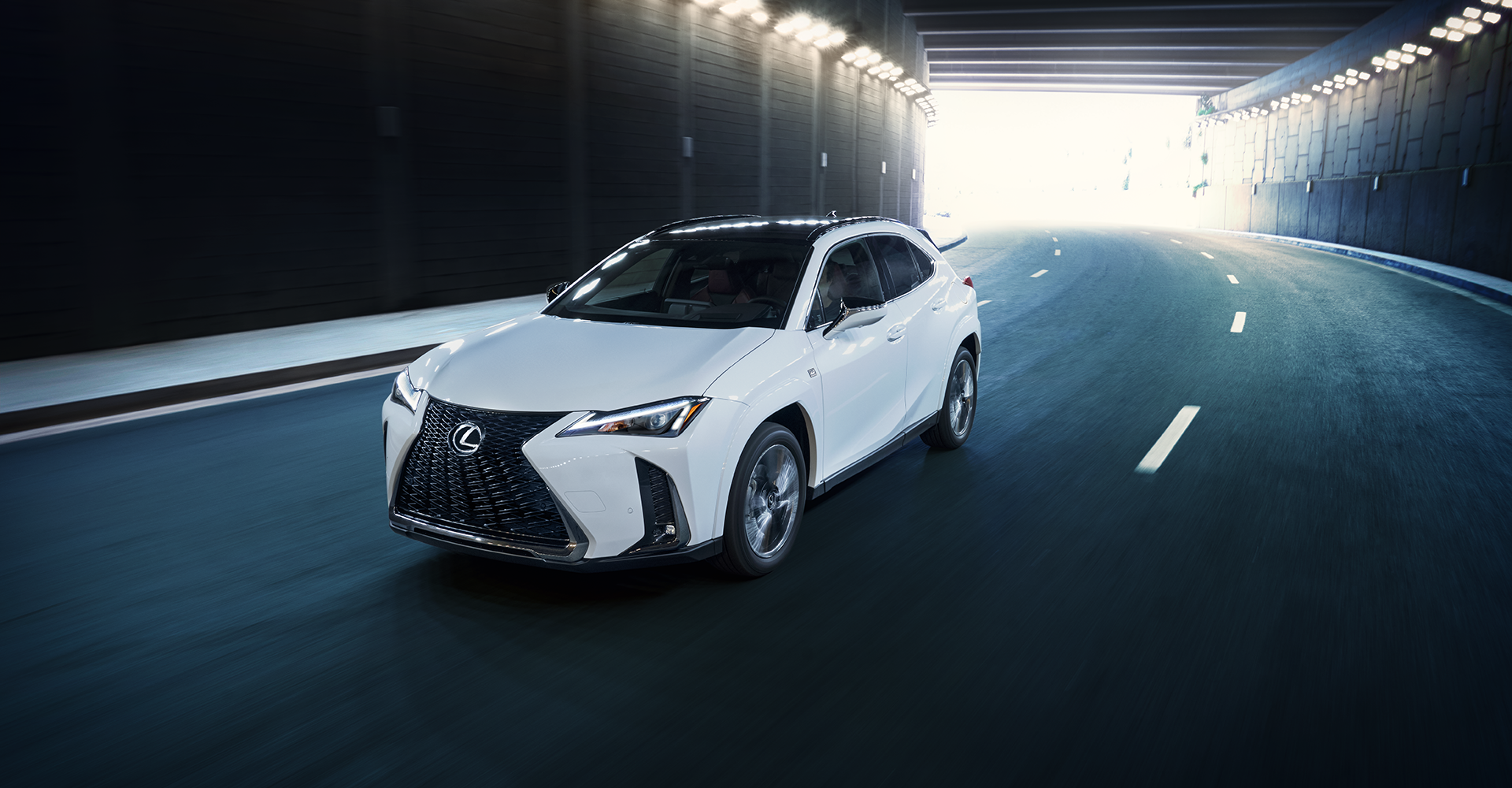
The 2026 Lexus UX shows up as a refined, hybrid-only crossover that doesn't disappear into traffic. Its spindle grille and sharp body lines give it a presence that bigger SUVs often can't match, but style is just where the story starts.
Lexus equips the UX with a 2.0-liter inline-4 paired with electric motors, producing 196 net combined horsepower. The setup favors smooth, confident acceleration over raw power, and that's by design. The hybrid system was built into the UX from the ground up rather than added on afterward.
Inside, Lexus does what Lexus does best: material quality and thoughtful ergonomics. The cabin seats five and offers 17.2 cu.ft. of cargo space, with an 8.0-inch touchscreen standard (a 12.3-inch touchscreen is standard on the F SPORT Handling trim), wireless Apple CarPlay and Android Auto, and heated mirrors included from the base trim.
Lexus Safety System+ 3.0 comes standard across the lineup, covering pre-collision detection with pedestrian, bicyclist, and motorcyclist detection, automatic emergency braking, all-speed dynamic radar cruise control, lane tracing assist, and proactive driving assist. For value-conscious buyers, having that much safety tech included from the start is a real edge, one we'll revisit in the safety section below.
2026 Audi Q5: Distinctive Features and Strengths
The Audi Q5 has been a benchmark in this segment for years, and the 2026 version keeps that streak going. It runs a 2.0-liter TFSI turbocharged four-cylinder with a 48-volt mild hybrid system, producing 268 hp and 295 lb-ft, paired with a 7-speed S tronic dual-clutch and standard quattro all-wheel drive. That combination gets it to 60 mph in an estimated 5.8 seconds, well ahead of the UX's 8.0, and gives it the spirited, connected-to-the-road feel that appeals to drivers who want engagement behind the wheel. It also tows up to 4,400 pounds when properly equipped.
The interior is genuinely one of the Q5's strongest selling points. A 14.5-inch MMI touchscreen and 11.9-inch digital instrument cluster anchor the cabin, both standard, along with wireless charging and wireless Apple CarPlay and Android Auto. Cargo space is generous too, at 27.6 cu.ft. behind the rear seats and 56.9 cu.ft. with them folded, giving the Q5 a real practical advantage for anyone hauling gear or passengers regularly.
The Q5 covers the fundamentals as standard, including Audi pre sense front collision mitigation, lane departure warning, and blind-spot monitoring with rear cross-traffic alert. Where the two lineups diverge is further up the list: adaptive cruise control is optional on the Premium trim and becomes standard from Premium Plus, while the UX includes all-speed dynamic radar cruise control and lane tracing assist on every grade.
Fuel Efficiency and Real-World Driving Costs
The UX's fuel economy comes in at 45 city/41 highway/43 combined in FWD form, or 44/40/42 with AWD, figures that comfortably beat the Q5's EPA-estimated 21 city/29 highway/24 combined. That's roughly 19 mpg of separation on the combined cycle, and it holds across drivetrains. Actual mileage varies by driving conditions, but commuters dealing with stop-and-go traffic on 101 or 280 will notice the difference immediately, since hybrid systems like the UX's shine brightest in exactly those conditions.
The UX also runs on regular unleaded, while the Q5 recommends premium. Combine the mpg gap with the fuel-grade difference and the savings compound in a way the sticker price comparison doesn't capture, particularly for drivers logging regular hill climbs toward Cupertino or Los Gatos, or longer weekend trips around the Bay Area.
Maintenance costs matter too. According to J.D. Power, Lexus has consistently ranked among the more dependable luxury brands, helped by the mechanical simplicity of its hybrid components. Audi's turbocharged, dual-clutch drivetrain brings more complexity, which has historically translated to higher average maintenance costs on annual expense comparisons.
Technology, Comfort, and Interior Craftsmanship
Both SUVs bring real tech and comfort to the table, just packaged differently. The UX offers a standard 8.0-inch touchscreen (with a 12.3-inch touchscreen standard on the F SPORT Handling trim), wireless Apple CarPlay and Android Auto, and a 6-speaker Lexus premium sound system standard, stepping up to 10 speakers on F SPORT Handling. Drive Connect with Cloud Navigation and Intelligent Assistant comes with a three-year trial on every grade. Lexus has clearly prioritized making the technology feel intuitive rather than piling on complexity.
Audi answers with its MMI infotainment system and 11.9-inch digital instrument cluster, both of which look sharp and feel modern, along with wireless charging built in. The Q5's larger footprint also gives it an edge in rear-seat space, which matters for buyers who regularly carry adult passengers in the back.
For solo or paired commuting around San Jose, though, the UX's cabin delivers the refinement a luxury buyer expects, with seat materials and build quality that feel every bit as premium despite the smaller footprint.
Reliability and Long-Term Value
Reliability is where Lexus consistently sets itself apart. According to J.D. Power dependability studies, the brand regularly lands near the top of long-term rankings, and Kelley Blue Book has also recognized Lexus models for strong resale value, a trend the UX benefits from directly.
As covered in the UX section above, Lexus Safety System+ 3.0 comes standard on every 2026 UX, bundling a full suite of driver assistance features without forcing buyers into an option package. That's a meaningful contrast with the Q5, where several driver-assist features live behind optional packages rather than coming standard.
The Q5 holds its own on safety, but its turbocharged, dual-clutch drivetrain adds mechanical complexity that the Lexus hybrid system simply doesn't carry. That extra complexity tends to show up as a wider spread of ownership experiences over time.
Final Verdict: Why the 2026 Lexus UX Comes Out Ahead
The 2026 Lexus UX vs. Audi Q5 debate comes down to what you actually ask a compact luxury SUV to do. For most Silicon Valley drivers, that's a daily commute, errands, and the occasional weekend trip, and the UX is engineered precisely for that life.
The efficiency gap is the headline. At 43 mpg combined in front-wheel drive and 42 with all-wheel drive, the UX nearly doubles the Q5's 24 mpg. It also runs on regular unleaded where the Q5 recommends premium, so the savings show up twice at every fill-up. What's included matters just as much: Lexus Safety System+ 3.0 is standard on all four grades, while the Q5 makes adaptive cruise control an option at the Premium trim.
The Q5 is a capable SUV, and its 27.6 cu.ft. of cargo space and 4,400-pound towing capacity are genuine strengths if you're hauling gear regularly. But for drivers who want luxury that's efficient to own and straightforward to spec, the UX makes the clearer case.
Schedule a Test Drive at Lexus Stevens Creek
If the 2026 Lexus UX sounds like your next vehicle, the best move is to see it in person. Lexus Stevens Creek is the top volume luxury dealer for new and pre-owned Lexus vehicles in Northern California based on 2024 sales data, and we've served the Silicon Valley community since 1989. Located at 3333 Stevens Creek Blvd in San Jose, we carry the largest Lexus inventory in the region. We also offer financing and leasing through Lexus Financial Services, and our factory-trained technicians handle service, backed by amenities like Wi-Fi lounges and loaner vehicles that make every visit easier.
To schedule a test drive or ask about current inventory and offers, call our sales team at 408-878-4112 or contact us online. We're open Monday through Saturday from 9 AM to 8 PM, and Sunday from 10 AM to 7 PM.