
Blog / Comparison

2027 Lexus ES 350e vs. ES 500e: Range, AWD, Performance, and Price Compared

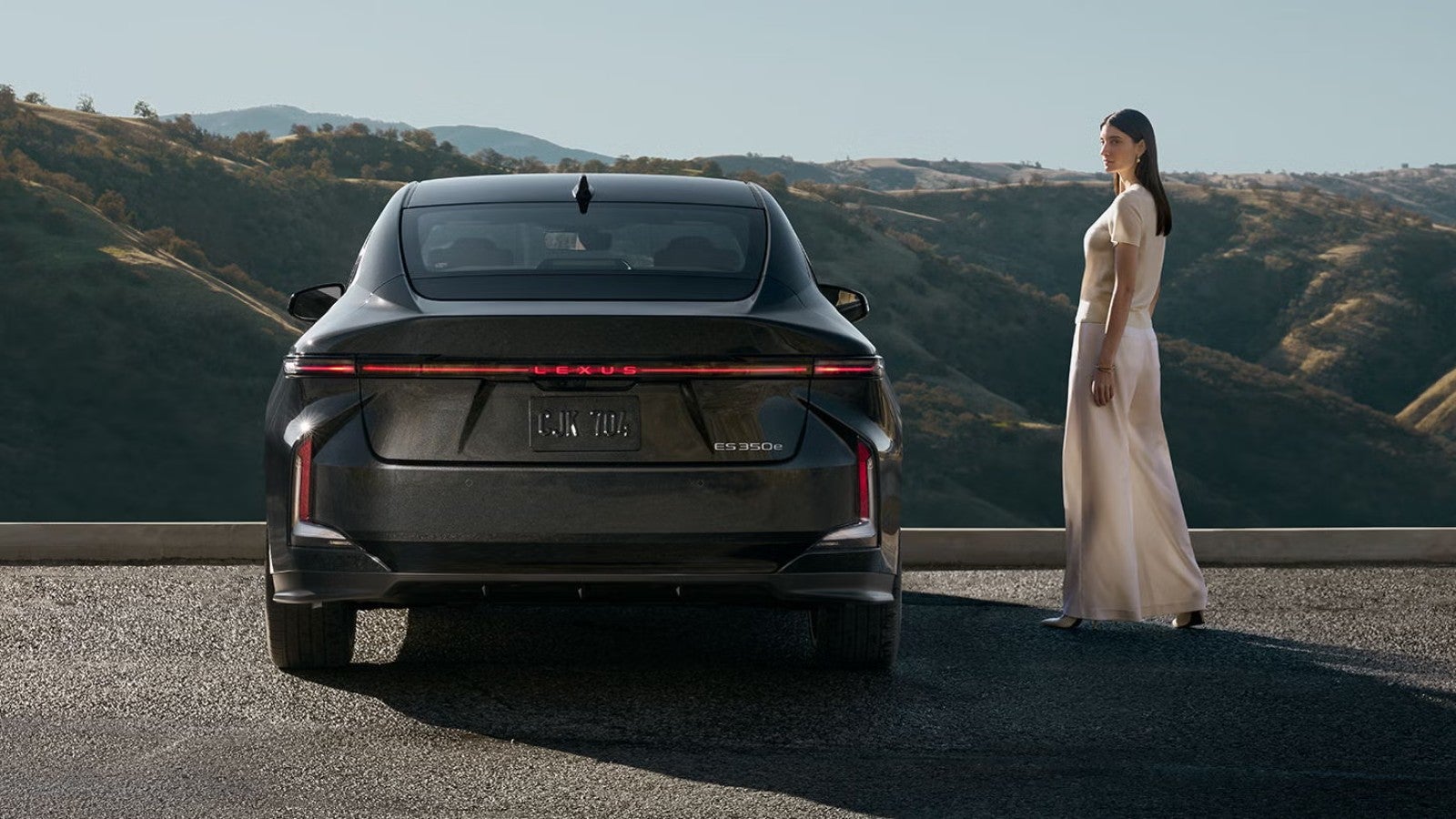
2027 Lexus ES electric sedan parked overlooking hills

The short verdict: the ES 350e suits efficiency-focused commuters, and the ES 500e suits drivers who want AWD and stronger performance. Both are quiet, comfortable electric luxury sedans, so the 2027 Lexus ES 350e vs ES 500e decision comes down to drivetrain, range, power, and price. Here at Lexus Stevens Creek in San Jose, we help drivers sort through those differences every day.

You can browse new vehicles as you read, and see the full Lexus electrified lineup if you're comparing options beyond the ES.

2027 Lexus ES 350e vs. ES 500e at a Glance

Lexus equipped the ES 350e with a single motor driving the front wheels, a simple layout built around efficiency. The ES 500e adds a second motor and AWD for quicker acceleration. Both share the same battery and the same refined cabin approach. If you're searching for a Lexus ES hybrid 2027, note that these two models are fully battery electric.

Key Differences in a Quick Comparison Table

Here’s how the two models compare side by side.

Feature ES 350e ES 500e
Powertrain Single permanent-magnet synchronous motor Dual motors (221-hp front, 118-hp rear)
Drivetrain FWD DIRECT4 AWD
Horsepower 221 hp 338 hp combined
Torque 198 lb-ft 198 lb-ft front, 125 lb-ft rear
0–60 mph (estimated) 7.4 seconds 5.1 seconds
EPA-estimated range 307 miles (19-in.); 292 miles (21-in.) 276 miles (19-in.); 272 miles (21-in.)
MPGe (combined) 127 (19-in.); 121 (21-in.) 114 (19-in.); 112 (21-in.)
Battery capacity 74.7 kWh 74.7 kWh
DC fast charging (10–80%) About 28 minutes About 28 minutes
Standard safety Lexus Safety System+ 4.0 Lexus Safety System+ 4.0

Range and Charging: How Far Each ES Goes

Range is where the single-motor ES 350e pulls ahead. A second motor and AWD add capability, and that comes with a shorter rated distance.

EPA-Estimated Range and Battery Capacity

Both models use the same 74.7-kWh lithium-ion battery beneath the passenger compartment. The ES 350e is rated at an EPA-estimated 307 miles on standard 19-inch wheels and 292 miles on available 21-inch wheels. The ES 500e gets 276 miles on 19-inch wheels and 272 miles on 21-inch wheels. Wheel size matters, so compare equivalent configurations.

Real-world range will differ from these estimates. Freeway speeds on Highway 101, hills, and cold or wet weather all affect how far a charge lasts, and so does HVAC use. For longer trips, plan around realistic consumption and a comfortable arrival reserve rather than the maximum number.

DC Fast-Charging and Home Charging Setup

Both models have an NACS (SAE J3400) port behind a power-operated door on the front passenger-side fender, and two adapters come standard: an AC adapter for J1772 Level 2 stations and a DC adapter for CCS fast chargers. DC fast charging from 10% to 80% takes about 28 minutes under ideal conditions at up to 150 kW, though battery level, temperature and the charger’s output all affect your stop.

At home, the onboard 11-kW AC charger supports Level 2 charging in about 7 hours under ideal conditions. A dual-voltage cable is standard for Level 1 (120V) and Level 2 (240V). Most Bay Area drivers will want a Level 2 setup on a 240V outlet. Condo and apartment residents should ask about parking access and charging options early, since that often matters more than a modest range difference.

Battery Preconditioning helps optimize charging speeds in different temperatures. You can activate it from the touchscreen, or automatically when a public charger is set as a Cloud Navigation destination, which requires an active Drive Connect trial or subscription. Plug & Charge requires an active Remote Connect trial or subscription plus one-time enrollment in the Lexus app. To see what's on the ground, check our EV and hybrid inventory.

FWD vs. AWD and Single- vs. Dual-Motor Drivetrains

This is the central mechanical choice. The single motor and front-wheel drive keep things simple, while the dual-motor AWD setup brings extra traction and power.

How Each Motor and Drive Layout Works

The ES 350e uses one motor to power the front wheels, a straightforward setup well suited to everyday commuting. The ES 500e pairs that 221-hp front motor with a 118-hp rear motor. Lexus calls its system DIRECT4 AWD. It reads wheel-speed and steering-angle sensor data along with acceleration to control front-to-rear torque, which can vary from 100:0 to 0:100. During launches and straight-line acceleration it uses 60:40 to 40:60 to help minimize pitch.

AWD Traction for Rain, Hills and Occasional Tahoe Trips

The Bay Area rarely needs AWD for snow. It helps most on wet roads, steep hills, and Sierra trips with chain controls. Picture a rainy morning on I-280 or a steep driveway in the Cupertino hills. AWD can help with accelerating on wet pavement or starting on an incline.

AWD doesn't replace proper tires, and it won't shorten braking distances on slippery roads. Tires, speed, and following distance still decide a lot. For occasional Tahoe trips, treat it as a planning task that includes winter equipment, posted chain controls, and charging access. If you stay on maintained urban and suburban roads, FWD is a reasonable fit.

Performance: Power, Acceleration and Ride Feel

The ES 350e is the more restrained configuration. If you want more immediate acceleration, the ES 500e is the stronger pick. Both are built for comfort, though, so extra power won't make either one a sports sedan.

Horsepower, Torque and 0-60 mph Times

The ES 350e makes 221 hp and 198 lb-ft of torque, reaching 60 mph in an estimated 7.4 seconds. The ES 500e adds a 125-lb-ft rear motor for 338 hp combined and an estimated 5.1-second sprint, a meaningful gap when merging onto Highway 101 or passing on the way to Fremont or Hayward.

Ride feel is shared. Lexus designed the ES driving signature to minimize vibration and road noise while keeping the handling responsive, and laminated side-window glass helps reduce cabin noise too. On a test drive, compare equivalent wheel and tire setups so tires don't cloud the drivetrain comparison.

Premium and Luxury Trims: Features Compared

Trim and powertrain are separate choices. A feature may come from the ES 500e, a higher trim, or an option package, so keep them distinct. Premium and Luxury are available on both models, with the ES 500e labeled Premium AWD and Luxury AWD.

Standard Tech, Safety and Comfort Features

Both models include a 12.3-inch Multi-Information Display, a 14.0-inch Lexus Interface touchscreen, a wireless device charger, wireless Apple CarPlay and Android Auto, dual-zone climate control, and an integrated Drive Recorder. Over-the-air Interface updates depend on a 5G network. Lexus Safety System+ 4.0 is standard on every 2027 ES. It includes Pre-Collision System with Pedestrian Detection, Full-Speed Range Dynamic Radar Cruise Control, and Lane Tracing Assist. These are driver aids, so they still require your attention.

Premium adds NuLuxe-trimmed seating, embossed door-panel accents, micro-geometric-pattern dashboard trim, Thematic Ambient Illumination, and a 10-speaker Lexus Premium Sound System. Luxury moves to semi-aniline leather-trimmed seating, bamboo-trimmed door panels and center console, Thematic Ambient Illumination with Bamboo Layering, and a 17-speaker, 1,800-watt Mark Levinson PurePlay Surround Sound System.

Luxury also adds a head-up display, Advanced Park, a knee-level radiant heater, passenger-side Lexus Memory, and Traffic Jam Assist and Lane Change Assist, which are Luxury exclusives. Traffic Jam Assist requires an active Drive Connect trial or subscription, and Premium buyers can add the radiant heater through the Cold Area Package.

The Convenience Package is available on Premium and standard on Luxury. The Cold Area Package adds a windshield-wiper de-icer and headlamp washer.

Upgrades Exclusive to the ES 500e

The ES 500e's exclusive upgrades are DIRECT4 dual-motor AWD, 338 hp, and quicker acceleration. Everything else comes from trim or packages. The Executive Package, for example, belongs to the ES 350e Luxury. It includes power-adjustable rear seats with recline and an ottoman, heated and ventilated outboard rear seats with massage, rear-seat climate controls, and two extra USB-C ports.

Price and Value: Is the ES 500e Worth the Premium?

Compared trim for trim, the ES 500e carries a $3,000 premium over the ES 350e. For that, you get 117 more horsepower, a 0-60 mph time about 2.3 seconds quicker, and AWD. The trade-off is 31 fewer rated miles on 19-inch wheels. If range and efficiency top your list, the ES 350e is the better value. Drivers who will regularly use the added power and traction will find the ES 500e worth its premium.

MSRP, Incentives and Charging Costs

MSRPs include the $1,395 Delivery, Processing and Handling fee. They are subject to change, and dealer price may vary.

  • ES 350e Premium: $49,005

  • ES 500e Premium AWD: $52,005

  • ES 350e Luxury: $57,405

  • ES 500e Luxury AWD: $60,405

Compare similarly equipped cars, since a lower-trim ES 350e against a higher-trim ES 500e exaggerates the drivetrain cost. Taxes, registration, options, and accessories are extra.

Lexus regularly offers incentives on the ES 350e and ES 500e, including EV customer cash for eligible California residents, along with College Rebate and Military Reward programs on qualifying finance or lease contracts. Offers change often, so ask our team about current incentives and eligibility, and check with your utility for any additional EV rebates.

Charging cost depends on your electricity plan and how often you use home versus public charging, so consider installation and ownership costs too. When you're ready to run numbers, explore financing with us.

Which Silicon Valley Driver Is Each ES Built For?

Start with your daily mileage and charging access, then think about who rides with you. Road conditions matter too. A quiet, comfortable sedan doesn't require the more powerful model.

Choose the ES 350e If…

  • You want the longest range, up to 307 miles on 19-inch wheels.

  • Your commute on Highway 101 or I-280 is mostly steady, and you value a calm drive over quick launches.

  • You prefer the lower entry price, starting at $49,005 MSRP for Premium.

  • You want the Executive Package, which is available on the ES 350e Luxury.

Choose the ES 500e If…

  • You want 338 hp and an estimated 5.1-second 0-60 mph time.

  • You regularly drive wet roads or steep hills and want AWD traction.

  • You make occasional Sierra trips and want DIRECT4 AWD as part of your winter plan, alongside proper tires.

  • You'll accept 276 miles of rated range on 19-inch wheels in exchange for added capability.

Explore the 2027 Lexus ES at Lexus Stevens Creek

Lexus Stevens Creek is a Lexus dealership at 3333 Stevens Creek Blvd, San Jose, CA 95117, with new and pre-owned Lexus vehicles and certified service. Contact us for a back-to-back test drive and pay attention to acceleration and ride comfort, plus cabin noise if you can. Check the seating too. Review the window sticker and request an itemized proposal so you can compare similarly equipped models. Ask us about home installation, connector compatibility, and public charging too. Sales hours are Monday through Saturday from 9 a.m. to 8 p.m. and Sunday from 10 a.m. to 7 p.m.

FAQs

Is the ES 500e worth the extra cost? It is when you'll regularly use the added power and AWD traction. If you value range and price, the ES 350e is the stronger value.

Does the ES 350e come with AWD? No. It is a single-motor FWD model. AWD comes with the ES 500e.

How long does charging take? Under ideal conditions, Level 2 charging takes about 7 hours with the onboard 11-kW charger. DC fast charging from 10% to 80% can take about 28 minutes at up to 150 kW.

Is the ES NACS compatible? Yes. Both models have an NACS (SAE J3400) port, and AC and DC adapters for J1772 and CCS stations come standard.
Posted in:

Related Posts

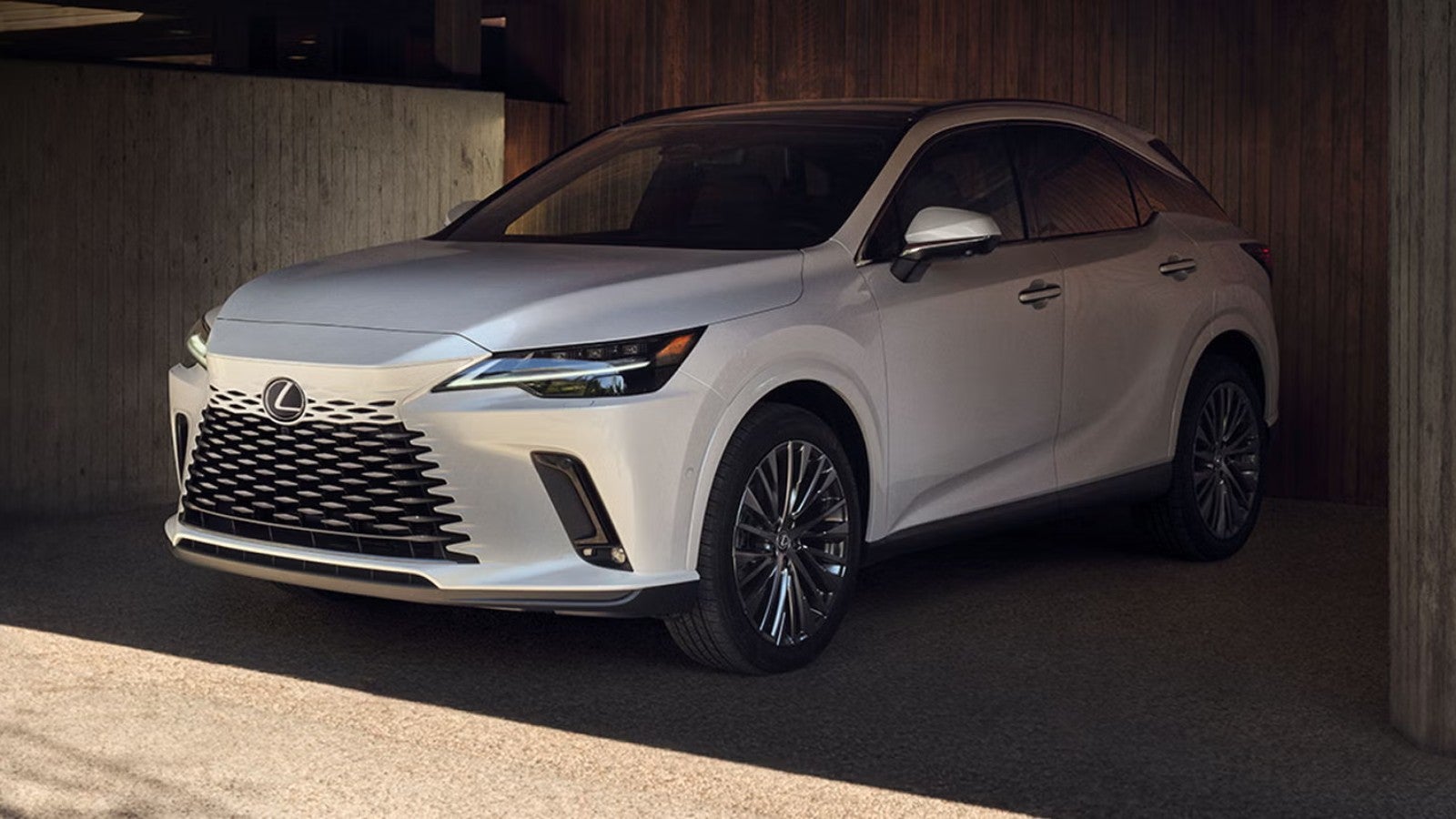
White 2027 Lexus RX hybrid SUV parked in a modern carport

2027 Lexus RX 350h vs. RX 450h+: Hybrid or Plug-In Hybrid?

The 2027 Lexus RX 350h vs RX 450h+ decision comes down to one question: do you want to plug in? With the RX 350h, you fuel it and drive, and no outlet is involved. The RX 450h+ is a plug-in hybrid, and regular charging gets you a lot of electric driving. Both are AWD SUVs, so the right pick depends on your routine and not on which one is "better." If you're shopping around San Jose, you can browse new vehicles as you read. We'll walk through performance, range, and charging in plain language, then get to the grades. 2027 Lexus RX 350h vs. RX 450h+ at a Glance Think of this as a habits question. The RX 350h gives you hybrid efficiency with no charging in your routine. The RX 450h+ adds rechargeable electric driving for shorter trips and keeps hybrid technology for longer journeys, which is how Lexus positions it. This table lines up the confirmed 2027 figures for both models. Fuel economy figures are manufacturer estimates. Feature RX 350h RX 450h+ Powertrain 2.5L four-cylinder hybrid 2.5L four-cylinder plug-in hybrid Combined system output 246 hp, 233 lb-ft 304 hp 0–60 mph 7.4 seconds 6.2 seconds Drivetrain Electric AWD (rear motor) Electric AWD (rear motor) Transmission CVT CVT Fuel economy (manufacturer-estimated) 37 city / 34 hwy / 36 combined mpg 36 city / 33 hwy / 35 combined mpg (gas only) Electric range N/A (not a plug-in) 38 miles, EPA-estimated Battery Nickel-metal hydride Lithium-ion Fuel tank 17.17 gal 14.53 gal Towing (braked) 3,500 lbs 3,500 lbs Cargo 29.59 cu ft; 46.19 cu ft max 29.59 cu ft; 46.19 cu ft max Standard safety Lexus Safety System+ 3.0 Lexus Safety System+ 3.0 The RX 450h+ gives up one mpg on gasoline and gains about 58 horsepower plus a meaningful electric range. Extra power and potential fuel savings are two different benefits, and some buyers only want one of them. Powertrain and Performance: Standard Hybrid vs. Plug-In Hybrid Both models pair a 2.5L four-cylinder engine with electric motors and a CVT, which delivers power smoothly instead of in stepped shifts. The battery and how it gets its energy are what differ. If you’re weighing other options, explore the full lineup of Lexus electrified vehicles, from hybrids to all-electric models. RX 350h: Self-Charging Hybrid Operation "Self-charging" simply means a hybrid you never plug in. The system coordinates the gasoline engine and electric motors automatically, so nothing about your routine changes. The RX 350h makes 246 system horsepower and 233 lb.-ft. of torque, and it reaches 60 mph in 7.4 seconds. That's brisk for daily driving. You fill up and go. RX 450h+: Plug-In Hybrid Power and Electric Driving The RX 450h+ carries a high-capacity lithium-ion battery that you recharge externally. That larger battery supports sustained electric driving, which is different from the brief, condition-dependent electric operation of a conventional hybrid. It also feeds a 304 net combined horsepower output and a 0-60 mph time of 6.2 seconds. A strong hybrid-system output says little about how the car performs on electric power alone. Electric operation varies with how hard you drive, the temperature, and what the system needs, so the engine may join in at times. AWD and Driving Feel Both models come standard with electric all-wheel drive. Each places a dedicated electric motor at the rear axle, which can send power to the rear wheels almost instantly when the front tires lose grip or when you accelerate hard. On the RX 450h+, the system’s added electric output also helps deliver its quicker 6.2-second 0–60 mph time. AWD helps with traction, but grip and stopping distance are another matter, so tires, weather, and your inputs still count. When you test drive both, pay attention to throttle response, engine sound under acceleration, ride comfort, and how smoothly the car moves between electric and gasoline operation. Fuel Economy, Electric Range and Charging Fuel economy is where the two models separate most. The RX 350h has one set of numbers. The RX 450h+ has three that measure different things, so it helps to keep them apart. MPG vs. MPGe and Total Driving Range MPG is the distance you travel per gallon of gasoline, while MPGe is an energy-equivalence measure that compares electric energy use with gasoline. The RX 450h+ is rated at 85 MPGe combined while running on battery power, and once the charge is used, Lexus estimates 35 mpg combined on gasoline. The RX 350h earns a manufacturer-estimated 36 mpg combined, while the RX 450h+ offers an EPA-estimated 38 miles of electric-only range. Keep the fuel tanks in mind for longer trips, too: the RX 350h carries 17.17 gallons to the RX 450h+’s 14.53, so the hybrid goes farther between fill-ups once the plug-in’s battery is depleted. Real-world electric range varies with temperature, speed, hills, load and climate-control use, so treat 38 miles as a best-case planning figure. Charging the RX 450h+ at Home and in Public Level 1 charging uses a standard household outlet and is slow. Level 2 uses a 240V circuit and is much faster. The RX 450h+ comes with a standard dual-voltage cable for 120V and 240V outlets, a J1772 (Type 1) socket, and a 6.6 kW onboard charger. Lexus estimates a full charge in approximately two-and-a-half hours at 240V, maximum current, and ideal conditions. For most owners, overnight Level 2 charging at home is the practical option, and public charging is optional. Before relying on home charging, have a qualified electrician check your outlet and circuit capacity. If you share a charger or use public stations, verify compatibility and speed first. What Happens When the Plug-In Battery Runs Low The RX 450h+ pairs a gasoline engine with its battery and offers hybrid technology for longer journeys, so range anxiety isn't a factor as long as there's gas in the tank. A low electric-range reading doesn't mean you're out of power. Charging when it's convenient adds electric miles. Your operating costs will depend on how often you plug in, local electricity and gasoline prices, and how much of your driving is electric. Not sure which fits your commute? Contact us and we'll help match a powertrain to your routine. Features, Grades and Practicality The RX character carries across both models, and the gap between them is narrower than you might expect. Grades and charging logistics are where they actually differ. What Both Powertrains Share Both seat five and offer 29.59 cu ft of cargo space behind the rear seats, or 46.19 cu ft with the seats folded, and both can tow up to 3,500 lbs, enough for a small boat or a pair of jet skis. On the Premium grade, a 9.8-inch touchscreen is standard with a 14-inch display available, while the 14-inch screen comes standard on the Premium+ and Luxury. Wireless Apple CarPlay and Android Auto, a wireless phone charger and a 12-speaker Lexus premium sound system are standard on every grade, so the 2027 RX interior feels familiar either way. Lexus Safety System+ 3.0 is standard, including Pre-Collision System with Pedestrian Detection, Full-Speed Range Dynamic Radar Cruise Control, Lane Tracing Assist, Road Sign Assist, Automatic High Beams, and Proactive Driving Assist. Blind Spot Monitor with Rear Cross-Traffic Alert and Intuitive Parking Assist with Auto Braking are also standard. These systems assist you, and they still need your attention. If you're leaning toward the RX 450h+, add one practical item to the list: where the charging cable lives and where you'll park to charge. Grade Availability: Not Every Grade Comes with Both Powertrains The 2027 RX comes in six grades: Premium, Premium+, Luxury, F SPORT Handling, F SPORT Performance, and F SPORT Design. The powertrains don't line up across all of them. RX 350h: Premium, Premium+, Luxury, and F SPORT Design RX 450h+: Premium and Luxury only If you want a sportier look, the RX 350h in F SPORT Design is the hybrid option. Our team can confirm which grade and powertrain combination suits you. The RX 450h+ costs more upfront and benefits most from regular charging, so compare similarly equipped vehicles when weighing the difference. Which RX Suits Your Bay Area Driving? In San Jose and across Silicon Valley, the right answer depends on your daily miles, whether you have charger access, and how much of your driving is on the freeway. Browse new Lexus SUVs in stock to see what's currently available. Choose the RX 350h If You Drive Freeway Miles or Can't Plug In If your week involves long stretches of I-280, US-101, or I-880, say a drive between Fremont and Santa Clara or Hayward and Santa Clara, the RX 350h keeps things simple. You get hybrid efficiency, and charging never becomes a chore. It also suits anyone in a building without a dependable charger, since nearby public charging doesn’t mean you can count on it when you need it. For weekend drives over Highway 17 to Santa Cruz or longer trips to Tahoe, the RX 350h handles them like any gasoline SUV, and its larger 17.17-gallon tank means fewer fuel stops along the way. Choose the RX 450h+ If You Have Home Charging and Short Commutes If you live near work, say a Cupertino to San Jose commute, and can plug in overnight, the RX 450h+ lets much of your routine run on electricity. Compare your actual round-trip mileage with a realistic electric range, and allow for hills, higher speeds, and heating or air conditioning. Freeway use alone doesn't rule out the RX 450h+. It just reduces how much of your driving is electric. Either powertrain handles longer trips without mandatory charging stops, and the RX 450h+ also lets you recharge when it suits you. Our service department can support hybrid and plug-in maintenance after you buy. Shop Lexus RX Inventory at Lexus Stevens Creek The best way to choose between the RX 350h and RX 450h+ is to drive them back to back. Shop our Lexus RX inventory to compare models by powertrain and grade, then schedule a test drive on I-280 to feel the RX 450h+’s quiet electric acceleration and the RX 350h’s seamless hybrid efficiency for yourself. Our team can also walk you through home charging and financing options to help you find the right RX. Visit us at 3333 Stevens Creek Blvd. in San Jose, Monday through Saturday from 9 a.m. to 8 p.m. and Sunday from 10 a.m. to 7 p.m., or call sales at 408-878-4112.

Lexus GX

2026 Lexus GX vs. Mazda CX-90: Why the GX Comes Out on Top

Choosing between a body-on-frame off-roader and a refined crossover comes down to how you actually plan to drive. The 2026 Lexus GX vs. Mazda CX-90 comparison depends on whether you need a three-row SUV that can tow a boat and climb a fire road, or one built primarily for pavement. If you want to see the GX in person, you can browse our new Lexus GX inventory at Lexus Stevens Creek before reading further. Both vehicles compete in the midsize three-row SUV space, though only the GX carries a luxury badge, and they take different paths to get there. The GX leans on rugged, truck-based engineering, riding on the same GA-F ladder frame platform as the flagship Lexus LX, while the CX-90 prioritizes on-road refinement and efficiency with a unibody design. That distinction shapes nearly every part of this comparison. Trim Value: What You Get for Your Money Trim value is where the GX's engineering priorities become clear. Rather than listing dollar figures, it helps to look at what each trim tier includes standard, since that's where the real comparison happens. Lexus GX 550 Trim Lineup The GX 550 comes in six trim grades: Premium, Premium+, Luxury, Luxury+, Overtrail, and Overtrail+. Even the base Premium trim includes Lexus Safety System+ 3.0, a 14-inch touchscreen, and full-time 4WD with a locking center differential. The 21-speaker, 1,800-watt Mark Levinson audio system becomes standard on the Luxury+ trim. Those weighing financing options can get pre-approved online before visiting the showroom. Mazda CX-90 Trim Lineup Mazda structures the CX-90 lineup to appeal to a wider price range, with the 3.3 Turbo Select as an accessible entry point and the 3.3 Turbo S Premium Plus at the top. New for 2026, the 3.3 Turbo S Premium Sport trim brings the sportier appearance package to the high-output engine, and Alexa Built-In is now standard across the lineup. The two SUVs stack up like this on core performance specs: Spec Lexus GX 550 Mazda CX-90 Engine/Powertrain 3.4L twin-turbo V6 3.3L turbo inline-6 with 48V mild hybrid; PHEV available Drivetrain Full-time 4WD i-ACTIV AWD Transmission 10-speed automatic 8-speed automatic Horsepower/Torque 349 hp / 479 lb-ft 280 hp / 332 lb-ft standard; 340 hp / 369 lb-ft on Turbo S with premium fuel Towing Capacity 9,096 lbs on Overtrail, 9,063 lbs on Premium, Premium+ and Overtrail+, lower on Luxury grades 3,500 lbs standard; 5,000 lbs with the Towing Package on Premium Sport and above Fuel Economy 15 city / 21 highway / 17 combined MPG, premium recommended 23 city / 28 highway / 25 combined MPG on regular fuel The 2026 Lexus GX: Rugged Luxury and Proven Capability The GX rides on the GA-F platform with genuine body-on-frame construction, seating up to seven and sharing its underpinnings with the Toyota Land Cruiser Prado sold globally. That foundation gives the GX a durability profile that unibody crossovers simply can't replicate, and it's a big reason we see so many long-term GX owners return to Lexus Stevens Creek for service rather than trade in early. Powertrain, Towing, and Off-Road Prowess Under the hood, the GX 550's twin-turbo V6 produces 349 hp and 479 lb-ft of torque. Towing varies more by grade than most shoppers expect: 9,096 lbs on the Overtrail, 9,063 lbs on Premium, Premium+ and Overtrail+, then 7,844 lbs on Luxury and 7,611 lbs on Luxury+. Confirm the number for the trim you're considering before you plan around it. Even at the conservative end, that's well beyond the CX-90's 5,000 lb ceiling on Premium Sport and above with the Towing Package. For Bay Area owners, that difference isn't abstract: it means pulling a boat up to Tahoe or hauling a trailer into the Santa Cruz Mountains without thinking twice about the load. Standard full-time 4WD with a locking center differential comes on every GX 550 trim, and the Overtrail and Overtrail+ grades add serious off-road hardware. You get a locking rear differential and adaptive suspension with E-KDSS, plus a standard 1-inch lift that brings ground clearance to 9.84 inches. Throw in 33-inch all-terrain tires, a front skid plate, and a roof rack, and you've got hardware most crossovers in this class simply don't offer. For drivers who want to escape San Jose traffic for a weekend on unpaved trails near the coast or up in the Sierra foothills, that gap matters. Edmunds independently tested the GX's 0-60 mph time at 6.7 seconds, slightly behind Lexus's own claimed 6.5 seconds but still respectable for a vehicle built with this much off-road capability in mind. Premium Interior Comfort and Technology Inside, the GX pairs NuLuxe leatherette or semi-aniline leather upholstery with heated, ventilated, and massaging front seats depending on trim. The 14-inch touchscreen runs alongside a 12.3-inch digital instrument cluster, and wireless Apple CarPlay and Android Auto come standard across the lineup. Cargo capacity reaches 76.90 cubic feet in the three-row configuration, or 90.50 cubic feet in the two-row Overtrail setup, giving families and gear-haulers real flexibility. If you want to experience the cabin firsthand, browse our new Lexus GX inventory to schedule a test drive. The 2026 Mazda CX-90: A Brief Look at Its Distinctive Features Mazda positions the CX-90 as an upscale alternative without a luxury badge, competing more directly with the Kia Telluride, Toyota Grand Highlander, and Acura MDX than with traditional luxury SUVs. It's a legitimately well-designed vehicle for buyers who prioritize daily drivability and styling over off-road hardware. Mazda offers a 3.3L turbocharged inline-6 producing up to 280 hp and 332 lb-ft in standard form, with the Turbo S variant pushing output to 340 hp and 369 lb-ft on premium fuel. A CX-90 PHEV variant adds up to 26 miles of electric-only range for drivers who do a lot of short-distance commuting. The CX-90 earned the 2026 IIHS TOP SAFETY PICK+ award along with a 5-Star NHTSA Overall safety rating, both solid marks that speak to its on-road engineering. Interior Space, Comfort, and Cargo Capacity Compared Seating capacity is close between the two, with the CX-90 accommodating 7 to 8 passengers depending on configuration and the GX seating up to 7 on Premium, Premium+, Luxury and Luxury+ grades. Cargo splits the decision. Behind the third row, the CX-90 is the more practical of the two, offering 14.9 cubic feet with the three-person bench and 15.9 cubic feet in configurations with the two-person third row, against the GX's 10.3. Fold everything down and the order reverses: the CX-90 maxes out at 74.2 to 75.2 cubic feet, while the GX reaches 76.9 in three-row form and 90.5 in the two-row Overtrail setup. If you regularly carry seven people and their bags, the Mazda wins the week. If you're loading camping gear or off-road equipment with the seats down, the GX has more room to work with. Technology, Safety, and Driver-Assistance Features Every GX 550 trim comes standard with Lexus Safety System+ 3.0, which includes a Pre-Collision System with Pedestrian Detection, full-speed Dynamic Radar Cruise Control, Lane Departure Alert with Steering Assist, Lane Tracing Assist, Road Sign Assist, Proactive Driving Assist and the Emergency Driving Stop System. Blind Spot Monitor, Rear Cross-Traffic Alert and parking sensors with automatic braking are also standard across the lineup. Traffic Jam Assist is available as well. Mazda equips every CX-90 with its i-Activsense suite as standard, and its IIHS TOP SAFETY PICK+ rating and 5-Star NHTSA score confirm it performs well in independent crash testing. Both brands take safety seriously, and the difference is at the margins rather than the fundamentals: features like front cross traffic alert, traffic sign recognition and the 360-degree parking sensors arrive on upper CX-90 trims, while the GX includes its equivalents from the base grade. Traffic Jam Assist on the GX requires an active Drive Connect subscription. Reliability, Warranty, and Ownership Costs Long-term ownership costs come down to warranty length and how the vehicle is expected to hold up once that coverage runs out. Lexus GX Warranty Coverage and Predicted Reliability The GX comes with a 4-year/50,000-mile basic warranty and a 6-year/70,000-mile powertrain warranty, backed by 6-year unlimited-mileage corrosion protection and 4-year roadside assistance. Lexus consistently ranks near the top of reliability studies from J.D. Power and Consumer Reports, a reputation that plays a real role in resale value and peace of mind. Our certified service team at Lexus Stevens Creek supports GX owners for the long haul, handling everything from routine maintenance to more involved repair work with factory-trained technicians. You can schedule a service appointment online whenever it's convenient. Mazda CX-90 Warranty Coverage and Predicted Reliability Mazda backs the CX-90 with a shorter 3-year/36,000-mile basic warranty and 5-year/60,000-mile powertrain warranty, plus 5-year unlimited-mileage corrosion coverage. The PHEV's battery carries separate 8-year/100,000-mile coverage. RepairPal gives the CX-90 a reliability score of 4.0 out of 5, a solid mark, though it comes with shorter coverage windows than the GX offers across the board. Why the 2026 Lexus GX Comes Out on Top Line up the 2026 Lexus GX vs. Mazda CX-90 side by side, and two numbers do most of the talking: warranty length and towing capacity. The GX's 6-year/70,000-mile powertrain warranty outlasts the CX-90's 5-year/60,000-mile coverage, and its towing capacity of up to 9,096 lbs nearly doubles the CX-90's ceiling of 5,000 lbs on upper trims equipped with Mazda Genuine Towing Accessories. Add in Edmunds' 7.3/10 rating, standard safety tech across every trim, and a reliability reputation reinforced by J.D. Power and Consumer Reports, and the GX is the more complete vehicle for buyers who want luxury without giving up genuine capability. Explore the 2026 Lexus GX at Lexus Stevens Creek The 2026 Lexus GX, built by Lexus on a proven body-on-frame platform, gives Bay Area drivers a combination that's hard to find elsewhere: real off-road hardware and a towing capacity that can handle serious gear, backed by a warranty that outlasts most competitors in its class. Ready to Get Behind the Wheel? If you're ready to see it in person, browse our new Lexus GX inventory at Lexus Stevens Creek, or contact our team to schedule a test drive and talk through financing or trade-in options. As Northern California's top-volume Lexus dealer, we're here to help you find the GX trim that fits how you actually drive.

Lexus GX

Lexus GX vs. LX: Comparing Size, Space, and Dimensions

If you've been cross-shopping Lexus SUVs, you've probably asked the same question we hear constantly at our showroom: which one is actually bigger, the GX or the LX? Each model has its own strengths depending on how you plan to use it, and a few of the numbers might surprise you. You can browse our new Lexus GX and LX inventory to see both models side by side, but let's break down the real measurements first. Lexus GX vs. LX: Which Is Bigger? In terms of overall footprint, the LX is the larger vehicle, with a longer body and a wider cabin designed for flagship comfort. Size isn't a single number though, and the GX closes the gap in ways that matter for real driving situations. The GX actually leads in third-row legroom, maximum cargo volume, and towing capacity. That's the kind of detail a spec sheet reveals but a showroom floor doesn't always show at a glance. Here's a quick side-by-side look at how the two compare on the numbers that matter most. Spec Lexus GX 550 Lexus LX 600 / 700h Length 197.05 in. 200.2 – 200.59 in. Width (w/o mirrors) 77.95 – 78.74 in. 78.35 in. Height 75.39 – 77.17 in. 74.21 – 74.61 in. Wheelbase 112.2 in. 112.2 in. 2nd-Row Legroom 36.73 in. 36.61 in. (33.86 in. Ultra Luxury) 3rd-Row Legroom 37.89 in. 31.1 in. Max Cargo (3-row models) 76.9 cu. ft. 64.0 cu. ft. (LX 600) / 62.4 cu. ft. (LX 700h) Max Cargo (2-row models) 90.5 cu. ft. (Overtrail, Overtrail+) 71.0 cu. ft. (LX 600) / 62.6 cu. ft. (LX 700h) Exterior Dimensions Compared Length, Width, and Height The GX 550 measures 197.05 in. in length, while the LX stretches to 200.59 in. on most grades and 200.2 in. on F SPORT, giving it a slightly longer, more commanding stance. Width without mirrors is close between them: 77.95 in. on standard GX trims, widening to 78.74 in. on Overtrail and Overtrail+, versus 78.35 in. for the LX. Neither model has a dramatic advantage squeezing through narrow lanes. Height flips the script a bit. The GX stands taller, at 75.39 in. on standard trims and up to 77.17 in. on the Overtrail grades, compared to the LX at 74.21 to 74.61 in. depending on wheel and tire size. That comes down to the GX's more rugged, body-on-frame stance and its taller ride height. Wheelbase and Turning Radius Both SUVs share a 112.2 in. wheelbase, so ride stability on the highway is comparable between them. Turning circles are close as well, with both landing right around 39.4 ft. curb-to-curb, and the LX needing roughly 42.0 ft. wall-to-wall on its 22 in. wheel setup. For anyone dealing with tight San Jose garages or the tiered parking structures downtown, that similarity means neither model has a real edge in close-quarters maneuvering, though the GX's shorter overall length can help when backing into a compact space. Interior Space and Passenger Comfort Front and Second-Row Room Up front, the LX offers more shoulder and hip room, at 61.42 in. and 59.65 in. respectively, compared to the GX's 59.51 in. shoulder and 56.46 in. hip room. Front legroom is essentially a wash, 41.14 in. in the LX versus 41.18 in. in the GX. Second-row comfort is close too. The GX offers 43.15 in. of headroom and 36.73 in. of legroom, while the LX provides 38.98 in. of headroom and 36.61 in. of legroom. One exception worth knowing: the LX 700h Ultra Luxury swaps the standard bench for a four-seat second row with a reclining right-rear seat and ottoman. That configuration trades measured legroom, dropping to 33.86 in., for a level of comfort closer to what you would expect in a chauffeured sedan. Third-Row Seating Space GX third-row legroom measures 37.89 in., about 6.8 in. more than the LX's 31.1 in. For families doing regular third-row carpooling around the Bay Area, that's a meaningful difference for anyone riding back there on a regular basis. The GX seats up to seven passengers, and that legroom advantage makes those rear seats genuinely usable for adults, not just kids on short trips. Cargo Capacity: Behind the Third Row and Maximum Storage Cargo numbers depend heavily on configuration, so it helps to compare like for like. In three-row form, the LX 600 offers 11 cu. ft. behind the third row, about 44 cu. ft. with the third row folded, and roughly 64 cu. ft. with the second and third rows down. The three-row GX comes in at 10.3 cu. ft., 40.2 cu. ft., and 76.9 cu. ft. in those same configurations. Behind the third row the two are nearly identical, but with everything folded the GX opens up close to 13 cu. ft. more usable space. The hybrid gives up ground here. The LX 700h holds about 7.2 cu. ft. behind the third row and tops out near 62.4 cu. ft. with the rear rows folded, noticeably less than the LX 600. Two-row layouts widen the gap further. The GX Overtrail and Overtrail+ reach 45.6 cu. ft. behind the second row and a maximum of 90.5 cu. ft. with the seats folded. A two-row LX 600 offers about 46 cu. ft. with all seats up and a maximum of 71 cu. ft., while the two-row LX 700h maxes out around 62.6 cu. ft. If you are hauling gear for a trip to the lake or moving bulky equipment, the GX is the more accommodating of the two. Size vs. Capability: Towing and Payload The GX runs a 3.4L twin-turbo V6 producing 349 hp and 479 lb-ft of torque, with a maximum tow rating of 9,063 lbs. Ratings vary by grade and equipment, so confirm the number for the specific trim you are considering. The LX 600 uses the same twin-turbo V6 tuned to 409 hp and 479 lb-ft, and the LX 700h hybrid produces 457 hp and 583 lb-ft. Both are rated to tow 8,000 lbs. when equipped with the Towing Package. That leaves the GX with roughly a 1,000 lb. advantage at the top of its range, which matters if you are hitching a boat for a weekend on one of the local lakes or heading for trails outside Silicon Valley. Curb weight and GVWR differ as you would expect. The GX sits around 5,467 lbs. with a 6,920 lb. GVWR. The LX 600 ranges from 5,754 to 5,875 lbs. with a 7,230 lb. GVWR, and the heavier LX 700h runs 6,128 to 6,261 lbs. with a 7,450 lb. GVWR. Choosing the Right Size for Your Lifestyle The GX: Rugged Versatility in a Mid-Size Frame The GX is built for buyers who want real capability without stepping into flagship-size territory. Minimum ground clearance is 8.7 in. on standard trims and 9.84 in. on the Overtrail grades, which suits hillside driveways and unpaved trails around the region. Its power figures pair with towing and cargo numbers that hold up in practice rather than just on paper. Across the lineup, from the standard trims through the off-road-focused Overtrail and Overtrail+, the GX balances comfort with outdoor capability. The LX: Flagship Space and Presence The LX remains at the top of the Lexus SUV lineup for good reason. Its extra length, wider front seating, and the available reclining second-row seat with ottoman create a cabin built around premium comfort. Ground clearance of 7.87 to 8.07 in. still handles rough surfaces, and the LX 700h adds meaningful torque for effortless highway work. For buyers who prioritize front and second-row luxury and value the LX's commanding road presence, it is the stronger choice for chauffeured comfort or long drives with fewer passengers in back. Experience the Difference at Lexus Stevens Creek Numbers on a page only tell part of the story. The best way to understand the difference between the GX and LX is to sit in both, fold down the seats, and see how each one fits your daily routine. Maybe that's a carpool run, maybe it's a weekend tow, maybe it's just a drive through the Santa Clara hills. Our team can walk you through every trim and configuration in person. Contact Lexus Stevens Creek to schedule a test drive and get a real feel for how these two Lexus SUVs compare on the road. Lexus GX vs. LX Size FAQ Is the Lexus GX or LX Bigger Overall? The LX is longer overall, at 200.59 in. versus the GX's 197.05 in., and it offers more front shoulder and hip room, making it the larger flagship model in terms of overall footprint. The GX is the taller of the two, particularly in Overtrail form. Which Model Offers More Third-Row Legroom? The GX actually leads here, with 37.89 in. of third-row legroom compared to 31.1 in. in the LX, a difference of roughly 6.8 in. that makes the GX's back seat more comfortable for adult passengers. Is Cargo Space Always Greater in the LX? No, and in most configurations the opposite is true. A three-row GX holds up to 76.9 cu. ft. with the rear rows folded, compared to about 64 cu. ft. in a three-row LX 600 and 62.4 cu. ft. in the LX 700h. In two-row form, the GX Overtrail and Overtrail+ reach 90.5 cu. ft. against the LX 600's 71 cu. ft. The LX holds a slight edge only in the space directly behind the third row, at 11 cu. ft. versus 10.3 cu. ft.