
Blog / Car Tips

Does The 2023 Lexus RX 350 Require Premium Gas?

2023 Lexus RX 350

The Lexus RX 350 for the 2023 model year has a powerful and efficient engine capable of carrying you and your family around San Jose and beyond. But what's required to keep this impressive vehicle running? We'll answer that question in detail below. We'll also cover some of this luxury SUV's best features.

Fuel Type, Oil Type, and Engine Maintenance Schedule

The engine is the heart of any vehicle. Using the right products and scheduling maintenance service consistently is vital to care for it properly and maximize its life span. The engine in the 2023 Lexus RX 350 is a 2.4-liter turbocharged four-cylinder with pistons in the inline configuration. It generates 275 horsepower and 317 lb-ft of torque, making the run from zero to 60 mph in 7.3 seconds. Lexus designed this engine to run on premium gas with an octane rating of 91 or higher. 

For this engine, you should use 0W-20 synthetic oil. It can handle the use of 5W-20 synthetic motor oil, but this will result in a reduced engine life span in the long run. The engine's oil must be changed every year or every 10,000 miles, whichever comes first. A 2023 Lexus RX 350 should also have its engine flushed yearly. That frequency should increase to twice a year if you typically drive your vehicle in hot or dusty areas.

Transmission, Drive Types, and Transmission Fluid

The transmission in the 2023 Lexus RX 350 is an eight-speed automatic with an overdrive gear. This luxury SUV is available in front-wheel-drive and all-wheel-drive forms. The former is more energy- and fuel-efficient. That said, the all-wheel-drive version has superior handling and cornering capabilities compared to the front-wheel-drive option. This transmission requires a specialized fluid distributed by Lexus. It's called Genuine Lexus RX350 ATF WS Automatic Transmission Gearbox Oil 08886-81210. You need to change the transmission fluid every 30,000 miles to keep your SUV running smoothly.

Body Dimensions and Tire, Rotor, and Brake Specs

The 2023 Lexus RX 350 measures 192.5 inches in length, 75.6 inches in width (excluding the side-view mirrors), and 63.7 inches in height, and it has a 112.2-inch wheelbase. It is available in the Standard, Premium, Premium+, Luxury, and F-Sport trim levels, and it comes with one of two types of tires. The standard tire size on most trim levels is 18 inches, and the factory-recommended options are the Bridgestone Ecopia H/L 422 Plus or Michelin Premier LTX with the sidewall designation 235/65R18. 

The upgraded tires are 20 inches with a sidewall code of 235/55R20. The standard rotor size for this luxury SUV is 13.39 inches for all four wheel positions. The 2023 RX 350 makes use of four-wheel anti-lock ventilated disc brakes. The tires are rated to last 60,000 miles before needing replacement, the rotors can last for 30,000 to 80,000 miles depending on usage patterns, and the brake discs will need swapping out before the 70,000-mile mark.

The 2023 Lexus RX 350's Most Notable Features and Options

There are a host of features and options available on the 2023 Lexus RX 350. Let's take a look at the best exterior, interior, entertainment, convenience, and safety features.

Exterior Features and Options

Standard exterior features on the 2023 RX 350 include a lip spoiler, a power rear liftgate, laminated glass, a metal-look grille, chrome side window trim, automatic high-beam projector headlights, tilting heated auto-dimming power-folding side-view mirrors, LED brake lights, and deeply tinted glass. Exterior options on this luxury SUV include black side window trim, a black grille, an express open-and-close tilting and sliding first-row sunroof with a power sunshade, and a body-colored front bumper with a metal-look rub strip. 

When it comes to your color options, all but the F-Sport trim level are available in Matador Red Mica, Eminent White, Iridium, Caviar, Nori Green Pearl, Nightfall Mica, or Nebula Gray Pearl. The F-Sport trim level is available in Iridium, Caviar, Nightfall Mica, Grecian Water, Ultra White, or Nebula Gray Pearl.

Entertainment and Cruise Control Features and Options

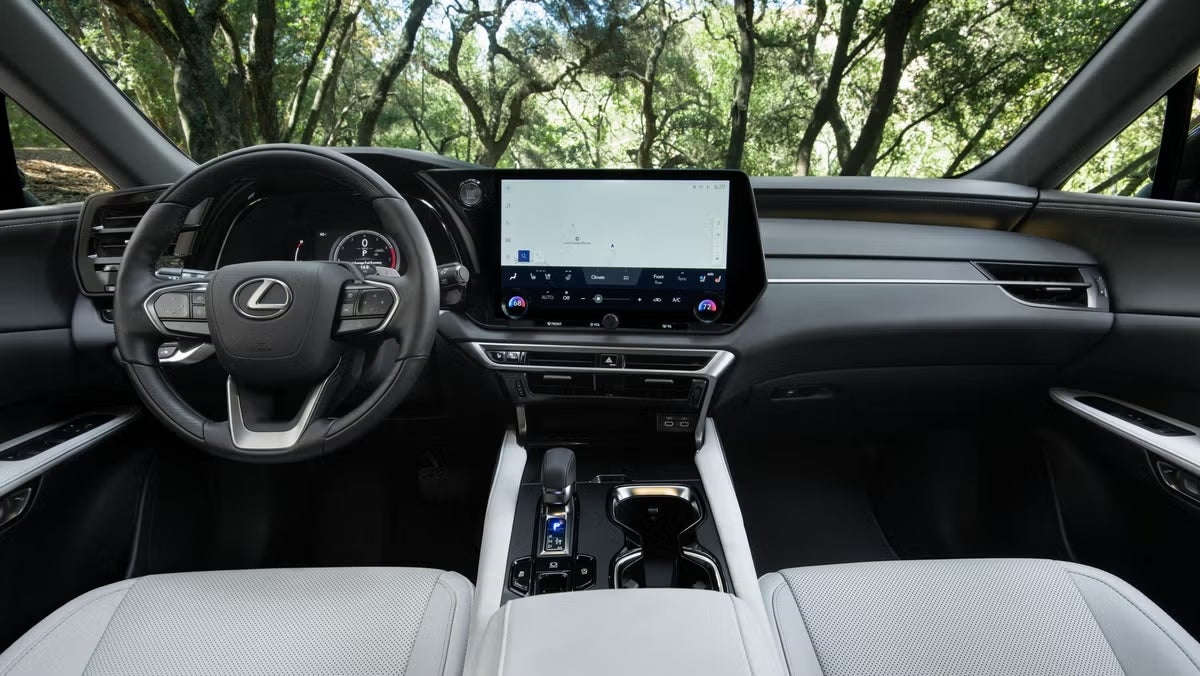
The 2023 RX 350 offers plenty of tech with a 12-speaker premium sound system, GPS navigation, high-definition radio, and a 9.8-inch Lexus Interface infotainment system with a touch-screen display. This system comes with Apple CarPlay, Google Assistant, Android Auto, Amazon Alexa, Siri Eyes Free, multi-information display (or MID) data sharing, and hands-free Bluetooth programming suites. You can control all these functions through an advanced voice-command system that's capable of easily understanding casual language. The cruise control is a distance-pacing stop-and-go system. The steering wheel has controls for both the audio and the cruise control.

Interior Features and Options

Standard interior features in the 2023 Lexus RX 350 include smart device remote engine start, fade-to-off interior lighting, one-touch up-and-down power windows, dual-zone air conditioning, a compass, and a power tilt and telescoping steering column. The driver's seat is heated and eight-way power-adjustable, the gear shifter is leather and metal effect, and the upholstery is NuLuxe synthetic leather. To further enhance the interior style, there's genuine wood, leatherette, and a metal-look interior trim. 

Interior options include a stylized steering wheel that tilts away automatically, special NuLuxe upholstery for the F-Sport trim level, a wireless device charging unit, a head-up display, a multicolor illuminated entry system, and memory settings for the side-view mirrors and steering wheel positioning.

Safety Features and Options

Standard safety features for the 2023 Lexus RX 350 include lane departure warning with steering assistance, a driver monitoring and alert system, active computerized evasion assistance, a backup camera, a blind-spot monitoring system, rear child safety locks, forward collision warning, automatic emergency braking, rear cross-traffic alert, and a tire-specific low-pressure warning system. It also comes with intuitive parking assistance programming that brakes automatically when the parking sensors detect a vehicle in the way. There are no optional safety features, meaning every trim level is equal in terms of keeping you secure on the road.

Feel free to reach out to us to learn more about the incredible 2023 Lexus RX 350 at our Lexus Stevens Creek dealership in San Jose, California. Our experienced and attentive team will gladly help you schedule a test drive or configure your ideal version of this world-class SUV.

Posted in:

Related Posts

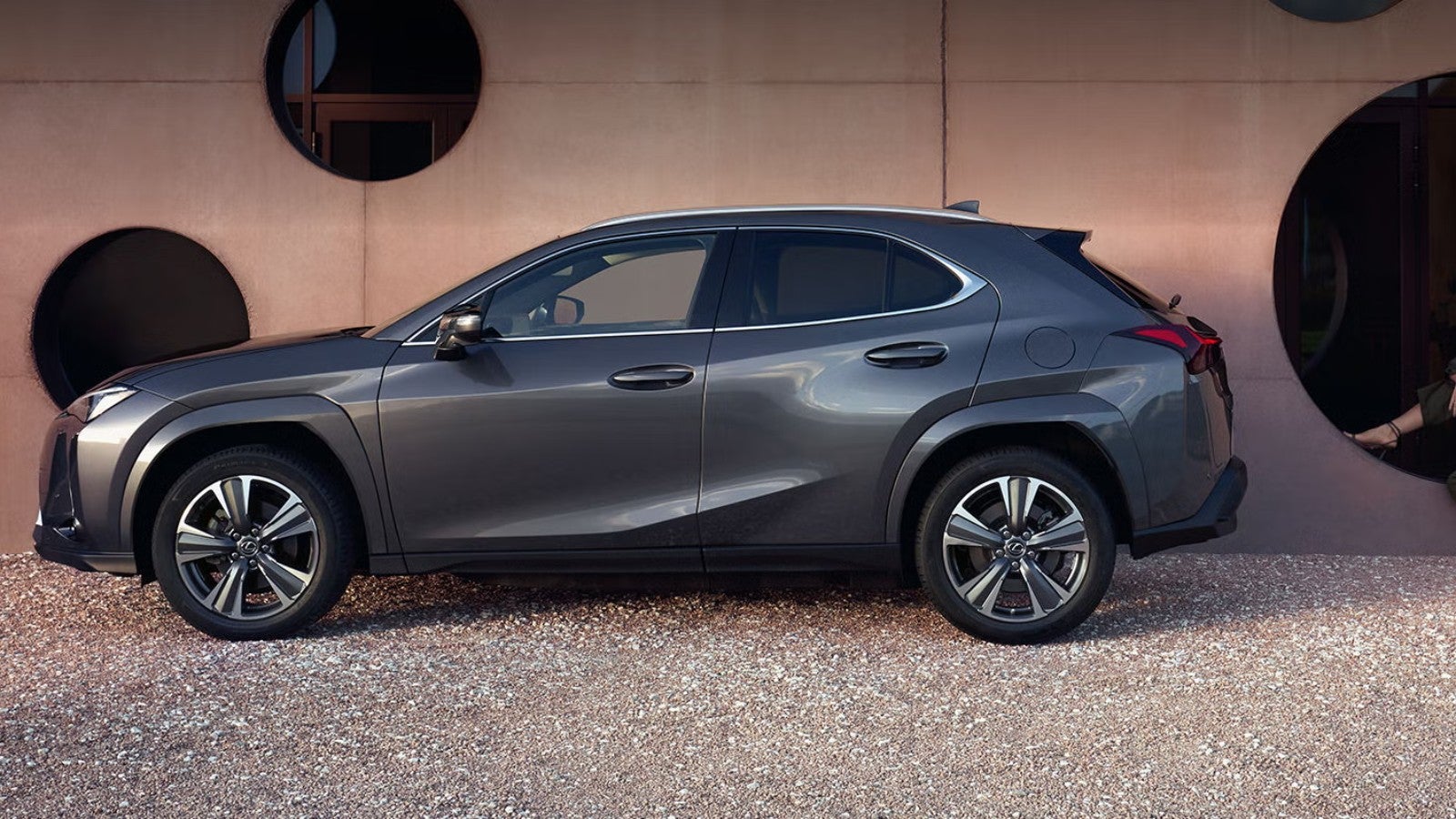
Gray Lexus UX hybrid crossover shown from the side

How Long Do Lexus Hybrid Batteries Last? Lifespan, Warranty, and Replacement Signs

If you’re wondering how long Lexus hybrid batteries last, here’s the short version. Industry estimates from Kelley Blue Book suggest hybrid batteries in general commonly last at least 10 years or 100,000 to 150,000 miles, though that’s a broad range for hybrids as a group, not a Lexus promise. Separately, Lexus backs hybrid batteries on 2020 and newer models with coverage for 10 years or 150,000 miles, whichever comes first. Warranty coverage isn’t the same as a lifespan guarantee, and our service team can help you understand exactly where your vehicle stands. How Long Do Lexus Hybrid Batteries Last? Most owners worry about one thing: a surprise replacement. Lexus and Toyota engineer these batteries for long service lives, and many keep working well past 100,000 miles. Some go beyond 200,000. Take those numbers as general expectations, since none of them is a replacement timeline. Typical Lifespan Is a Range, Not a Guarantee Think about longevity in both years and miles. Calendar aging continues even when a vehicle racks up few miles, so mileage alone doesn't tell you how healthy the battery is. A battery's useful life depends on its condition and its ability to support normal hybrid operation. The date on the calendar or the number on the odometer won't settle that. Warranty length and expected lifespan are separate things. A battery whose coverage has expired doesn't necessarily need replacing, and many original batteries keep working long after the warranty ends. How Hybrid Battery Aging Works Degradation is a gradual decline in the battery's ability to hold charge over time and use. Every charge and discharge cycle adds a little wear, and heat speeds that wear along. Over the years, the battery may give less electric assist, which means the gasoline engine runs more often. Battery-management software helps by controlling charging, discharging, and operating temperatures. A tiring battery may first show up as lower efficiency, while a sudden system failure is a different event, and certain faults can keep a vehicle from running at all. What Affects Lexus Hybrid Battery Lifespan Age, mileage, service records, storage history, and operating conditions all play a part, and they make the most sense when you look at them together. We don't try to predict an individual battery's life from any one factor. Age, Mileage, and Vehicle History Regular driving supports normal battery operation, but high mileage doesn't automatically mean a battery is in better shape. Heat exposure, maintenance, and accumulated wear still matter. Vehicle history helps too. Lexus's U.S. dealer service-history database can provide records from any Lexus dealership in the country when the work was done at a Lexus dealership. That's useful if you bought a vehicle used or moved here from elsewhere. Climate, Driving Habits, and Long Parking Periods Repeated exposure to extreme heat can wear hybrid batteries faster, while extreme cold temporarily reduces efficiency, so a winter dip in fuel economy isn’t necessarily a sign of permanent damage. San Jose’s mild Bay Area climate is easier on batteries than harsh extremes, though stop-and-go traffic on I-280, US-101 and CA-87 still adds charge cycling. Long periods of parking matter too. A hybrid battery’s charge can deplete while the vehicle sits, and the 12-volt battery can weaken as well. As a general rule, drive or run the vehicle for 20 to 30 minutes every week or two if it’ll be parked for an extended time, and check your owner’s manual for model-specific storage guidance. Maintenance and Cooling System Care The hybrid battery’s cooling system plays a big role in its health. Many Lexus hybrids draw cabin air to cool the battery, so a clogged fan or filter can let it run hotter and contribute to degradation over time. Keep the intake vents clear, and have the fan filter cleaned or replaced as recommended, especially if you carry pets, since dust and pet hair can restrict airflow. Some models also display a maintenance message when cooling components for the hybrid system need attention. Your owner’s manual explains the messages and vent-cleaning steps for your specific model, and our technicians can handle the service for you. Lexus Hybrid Battery Warranty Protection Most owners want clear answers on the warranty. Coverage is limited by time and mileage, so your in-service date and odometer both matter when you assess how much remains. What the Warranty Covers and Excludes The Hybrid Battery Warranty covers repairs needed to correct defects in materials or workmanship in covered components supplied by Lexus, subject to stated exceptions. Normal age-related capacity loss isn't automatically a covered defect. The Hybrid Battery Control Module, Hybrid Control Module, and inverter with converter fall under the separate Hybrid System Warranty of 8 years or 100,000 miles. Exceptions include abuse or negligence, misuse, improper repairs, alterations or tampering, and lack of or improper maintenance. Your Warranty and Services Guide governs specific coverage. Model year Hybrid Battery Warranty Other high-voltage hybrid components 2020 and newer 10 years or 150,000 miles, whichever comes first Hybrid System Warranty: 8 years or 100,000 miles, whichever comes first Earlier coverage 8 years or 100,000 miles 8 years or 100,000 miles Warranty Terms, State Variations, and Transfers on Used Models The extended coverage applies to all new 2020 and newer Lexus hybrids, and it transfers to subsequent owners. Buying used doesn’t restart the clock, though, so verify the original in-service date, current mileage and remaining coverage before you buy. Coverage varies by model year, vehicle and state, so check your Warranty and Services Guide, or share your VIN with our service team, and we’ll confirm the exact terms for your vehicle. Signs of Lexus Hybrid Battery Degradation Early signs are usually subtle. Many have other causes, so take them as a reason to get a check, not as proof of failure. Fuel Economy, Power, and Engine Behavior Changes Possible signs include reduced fuel economy and the electric motor not engaging under hard acceleration. A persistent drop from your usual fuel economy is worth inspecting, especially when your driving and the weather haven't changed. Less responsive acceleration or a busier gasoline engine can also come from causes unrelated to the traction battery. Dashboard Warnings and Erratic Battery Gauge Dashboard warning lights or messages, such as a hybrid system malfunction or traction battery system alert, can signal trouble, though the exact wording varies by model. These warnings always call for diagnosis, but since cooling, electrical or sensor faults can trigger similar messages, a warning doesn’t mean the whole battery pack needs replacing. A gauge that swings more than usual is worth having checked, though normal charge changes happen during acceleration and braking. Bring any message you see, plus your mileage and symptoms, to your service visit. When you notice these, schedule service so a technician can look into the cause. Hybrid Battery vs. 12-Volt Battery Issues Your Lexus has two batteries. The hybrid (traction) battery supports electric driving and stores energy recovered from braking. The 12-volt battery powers low-voltage electronics and helps the vehicle's systems start up. Their warnings differ, and a weak 12-volt battery can cause startup trouble or messages that resemble hybrid-system problems. Maintenance Tips to Help Your Hybrid Battery Last Good habits support longevity, though they can't prevent natural aging. Start by following Lexus's recommended schedule, with service intervals described at six months or 5,000 miles. New vehicles receive complimentary first and second scheduled maintenance at six months/5,000 miles and 12 months/10,000 miles, whichever comes first. Beyond that, a few battery-care habits matter most: Limit repeated extreme heat exposure, and park in shade when you can. Avoid lengthy non-use, and check your owner's manual before storing the vehicle. Keep the cooling fan and filter maintained, and keep intake vents clear of luggage and clothing. Use only approved cleaning procedures, and never try to reach high-voltage components yourself. What to Do If You Suspect a Battery Issue Staying calm helps. A warning calls for diagnosis, which may or may not lead to a repair bill. Steps to Take When a Warning Appears Read the dashboard message and follow your owner's manual. Stop in a safe place if the vehicle tells you to or loses substantial power, and arrange roadside assistance rather than driving to us. Jot down the message and any symptoms, along with your current mileage. Don't open the battery enclosure or touch orange high-voltage cables. Check your warranty status before approving major work. Contact our service department for diagnosis. Diagnostic Testing and Replacement Options Replacement isn't always a full-pack swap. Diagnostics identify the cause first, whether that's battery wear, a cooling restriction, a weak 12-volt battery, or another electrical fault. Our service department can perform a battery load test as part of that process. Ask for an explanation of the findings and a written estimate before authorizing work. Repair recommendations should follow vehicle-specific testing and warranty verification. High-voltage systems are dangerous, so leave all battery work to qualified technicians. Lexus Hybrid Battery FAQs Do hybrid batteries need to be replaced at a set mileage? No. Condition, symptoms, and diagnostic findings should guide the decision, not an odometer milestone. Can the original battery last beyond its warranty? Yes. The end of the warranty says nothing about when the battery will give out. Does low fuel economy always mean the battery is failing? No. Weather and tires can both affect it, as can driving conditions and engine issues. Can long parking affect battery health? Yes. Charge can deplete while parked, so follow your storage guidance. Is a used Lexus hybrid a battery risk? Not automatically. Ask for the service history, a battery health inspection and the remaining warranty coverage before you buy. Is battery replacement always the first repair? No. Diagnosis may point to a cooling, 12-volt, or other electrical issue instead. Schedule Hybrid Battery Service at Lexus Stevens Creek Whether you’ve noticed lower fuel economy, unusual engine behavior or a hybrid warning message, our certified Lexus technicians can diagnose the real cause, including a battery load test, check your warranty coverage and walk you through your options before any work begins. Schedule your hybrid service online in just a few minutes: select your model and year, choose your services and pick a time that works for you. Bring your mileage, any warning messages and your service records. You’ll find our service department at 300 Martin Avenue in Santa Clara, open Monday through Saturday from 7 a.m. to 6 p.m.

Lexus Owner FAQs: Maintenance Lights, TPMS, BSM, and More

Lexus Owner FAQs: Maintenance Lights, TPMS, BSM, and More

Owning a Lexus means driving one of the most refined vehicles on the road, but even the best-engineered cars come with questions. A dashboard light you don't recognize, a TPMS warning that appeared overnight, a key fob that stopped responding for no apparent reason. Knowing how to handle these moments is what keeps ownership from becoming stressful. This guide covers the most common Lexus owner FAQs so you can act confidently and keep your vehicle performing the way it should. If your vehicle needs attention now, schedule a service appointment with our team at Lexus Stevens Creek and we'll take it from there. What Are the Most Common Questions Lexus Owners Have? The questions we hear most often cluster around a few key areas: interpreting dashboard warnings, resetting service reminders, understanding safety features like the Blind Spot Monitor, and handling basic upkeep like tire pressure resets and key fob battery replacements. These aren't signs of inexperience. They reflect how much is packed into a modern Lexus. Our service team hears them regularly from drivers across all model lines, from the popular RX 350 to the performance-focused IS 500. If you're also considering a new vehicle alongside your service needs, browse our new Lexus inventory to see what's available. Getting clear answers makes a real difference in how confidently you drive and how well you maintain your car over the long haul. How Do I Reset the Maintenance Required Light on My Lexus? The Maintenance Required light is probably the most frequently Googled topic in Lexus troubleshooting. It appears suddenly, offers almost no explanation, and can feel more alarming than it actually is. In most cases, it simply means your vehicle has hit a scheduled service interval and needs a routine checkup. What Triggers the Maintenance Required Light? Lexus vehicles track mileage to determine when scheduled maintenance is due. The light typically appears at roughly every 5,000 miles after the last service reset. For drivers using full synthetic oil, the service interval extends to around 10,000 miles, though the reminder still triggers at 5,000. Driving habits matter too. Frequent short trips and stop-and-go Silicon Valley commute traffic can accelerate wear on engine oil and fluids, meaning your actual service needs may arrive sooner than the standard schedule suggests. Step-by-Step: Resetting the Maintenance Light Yourself Once you've completed the required service, resetting the light is pretty straightforward. The exact steps vary slightly by model year. For older models: Turn the vehicle off. Press the start button without pressing the brake pedal to enter accessory mode. Use the trip meter button on the instrument cluster to navigate to the Trip A or odometer display. Hold that button down for several seconds until the display flashes and resets to zero. Turn the vehicle off and restart it. The light should be gone. For newer models with a touchscreen multi-information display, navigate to vehicle settings, locate the maintenance section, and select the reset option. If you're unsure which procedure applies to your trim, our service team is happy to walk you through it. What Is BSM on a Lexus and How Does It Work? BSM stands for Blind Spot Monitor. Lexus equips this system with radar sensors mounted behind the left and right sides of the rear bumper to detect vehicles traveling in adjacent lanes. When another vehicle enters your blind spot zone, a warning indicator lights up in or near the corresponding side mirror. Signal a lane change while that indicator is active, and the system issues a more urgent alert to stop you from merging into an occupied lane. Highway driving, tight urban lane changes, merging onto busy Bay Area freeways. All of it becomes noticeably less stressful with BSM active. Why Is My BSM Light On and What Should I Do? If the BSM indicator stays lit when no vehicle is nearby, or a message appears saying the system is unavailable, a few likely causes are worth checking. The radar sensors sit near the rear bumper corners, which makes them vulnerable to blockage from mud, snow, ice, or heavy debris. Start with a visual inspection. Clean the sensor areas gently with a soft cloth and warm water, then see if the system reactivates. If that doesn't resolve it, the issue could point to sensor misalignment following a repair, a software glitch, or internal sensor damage. At that point, having a factory-trained technician run diagnostics is the right call. Persistent BSM warnings shouldn't be ignored. How Do I Reset the Tire Pressure Monitor on My Lexus? The TPMS keeps an eye on air pressure in each tire and alerts you when one or more drops below the recommended threshold. Bay Area temperature swings, common in the San Jose area, can cause temporary pressure drops that trigger the light even without a puncture. After inflating a tire, rotating tires, or installing a new set, you'll often need to reset the system so it recalibrates properly. On most Lexus models, navigate to vehicle settings on the dashboard display, find the TPMS or tire pressure section, and select the reset or initialize option. The system will relearn correct readings as you drive, usually within a few miles. Always confirm your tires are inflated to the correct PSI first. That number is printed on the sticker inside the driver's door jamb. If your tires check out and the light stays on, visit our service department for a tire pressure inspection. Our technicians can confirm whether the issue is pressure-related or points to something else. When Does a TPMS Warning Signal a Sensor Problem? Not every TPMS alert means your tires are underinflated. Lexus uses a direct TPMS system with individual battery-powered sensors mounted inside each wheel. Those batteries typically last 5 to 10 years before they need attention. A dead or damaged sensor triggers a fault warning that looks different from a standard low-pressure alert. The low-pressure light shows a cross-section of a tire with an exclamation point. A sensor malfunction usually shows the same symbol alongside a separate indicator or an accompanying message on the display. If you suspect a sensor issue, a diagnostic check is the right next step. How Do I Replace the Battery in My Lexus Key Fob? This is one of the easiest DIY tasks a Lexus owner can handle. Most Lexus key fobs use a CR2032 lithium coin battery, available at most pharmacies or hardware stores for roughly $3 to $8. Battery lifespan is typically 1 to 2 years. To replace it: Locate the small mechanical key hidden inside the fob and remove it. Use a flathead screwdriver to gently remove the key fob cover plate. Remove the old battery and note its orientation. Press the new CR2032 into place in the same position. Snap the casing back together and test. Signs that the battery is running low include having to move closer before the fob responds, needing to press buttons multiple times, or seeing a low-battery warning on your dashboard. What If My Key Fob Still Does Not Work After a Battery Change? First, confirm the battery is seated correctly with the positive side facing the right direction. Even a slight misalignment will prevent the fob from working. Then check the battery contacts inside the fob for corrosion or visible damage. If the fob looks physically fine but still won't respond, it may have lost its pairing with the vehicle, or there could be internal or water damage requiring reprogramming. That requires a dealership visit, since the process involves syncing the fob to the vehicle's onboard computer. Our team at Lexus Stevens Creek can handle this quickly. What Other Dashboard Warnings Do Lexus Owners Ask About? Beyond maintenance reminders and TPMS alerts, the Lexus dashboard can display a range of symbols that aren't always self-explanatory. Here's a quick reference for the most common warnings: Immediate Action — Stop Driving Schedule Service Soon Red Oil Pressure Light (oil can icon) Check Engine Light (amber) Red Temperature Light (thermometer icon) Maintenance Required Light (amber) Red Brake System Light TPMS Warning Light (amber) Red Battery Light ABS Light (amber) As a general rule: red lights are urgent. Amber lights need attention soon but typically don't require stopping immediately. Check Engine Light vs. Maintenance Required Light These two warnings are commonly confused. Here's the key difference: Maintenance Required Light Check Engine Light Icon Amber wrench Amber engine outline Cause Mileage-based service reminder Detected engine or emissions fault DIY reset? Yes, after service No — requires diagnostic scanner Urgency Schedule routine service Schedule diagnosis promptly The Maintenance Required light carries no diagnostic information. The Check Engine light stores fault codes that a technician needs to read. Letting it go can turn a minor issue into a costly repair. Still Have Questions? Visit Lexus Stevens Creek for Expert Help Some questions are easy to resolve with a quick reset or a fresh battery. Others need trained eyes and the right diagnostic equipment. That's where having a reliable Lexus center in San Jose really matters. Our service center is staffed by factory-trained technicians and is open Monday through Saturday from 7 AM to 6 PM. Whether you need a routine oil change, a BSM diagnostic, a TPMS sensor replacement, or key fob reprogramming, we're ready to help. If you're keeping up with your service history, that record can also add real value when it's time to trade in. You can get an instant cash offer to find out what your Lexus is worth. Contact us or schedule your next service appointment online. Lexus ownership doesn't have to be complicated. With the right team behind you, keeping your vehicle in peak condition is straightforward.

Lexus RX 350 Garage Door Opener

How to Program Your Lexus RX 350 Garage Door Opener

Setting up your Lexus RX 350's HomeLink system only takes a few minutes and saves you from juggling multiple garage remotes in your car. Whether you're programming HomeLink for the first time or starting fresh after a system reset, we'll show you exactly how to program your Lexus RX 350 garage door opener using those buttons on your rearview mirror or overhead console. What You Need Before Programming Your Lexus RX 350 HomeLink Gather these items before you start: Your handheld garage door remote (make sure the battery's fresh) Access to the "learn" button on your garage door motor unit (check the back or side panel) Your vehicle with the ignition in accessory mode Reprogramming existing buttons? You'll want to clear the old codes first. Hold HomeLink buttons 1 and 3 together for about 10 seconds until the LED changes from solid to flashing rapidly. HomeLink works with most major brands like Chamberlain, Genie, and LiftMaster. This same process works for other Lexus models too (RX 330, RX 400h, GX, and NX). Step-by-Step Guide to Programming Your Garage Door Opener Here's how to get everything connected: Find the HomeLink buttons on your rearview mirror or overhead console. You'll see three buttons you can program. Press and hold your chosen HomeLink button until the LED starts blinking slowly. This activates programming mode. Position your garage remote 1-3 inches from the HomeLink buttons. Now press both your garage remote button and the HomeLink button at the same time. Keep holding until the LED flashes rapidly (usually takes 10-30 seconds). Locate the "learn" button on your garage door motor inside your garage and press it once. The motor's light will come on. Get back to your car within 30 seconds and press your programmed HomeLink button 2-3 times. Your garage door should respond, which means you've got it working. Having trouble with the setup? Our certified technicians at Lexus Stevens Creek can make sure your HomeLink system connects properly. Quick Troubleshooting Tips If things don't work right away, here are some fixes: LED won't blink rapidly: Swap out your garage remote battery and hold the remotes closer during pairing. Door doesn't respond after programming: Hit the HomeLink button several times right after you activate the motor's "learn" button. Programming keeps getting erased: Clear all existing codes first (hold buttons 1 and 3 for about 10 seconds until the LED changes from solid to flashing rapidly), then start over. System won't work at all: Some newer systems that use Security+ 2.0 technology, such as certain LiftMaster and Chamberlain models, may require additional programming steps. Check the HomeLink website or your garage door opener manual for model-specific instructions. Get Expert Help at Lexus Stevens Creek Still can't get HomeLink working? Our Bay Area service team can program your garage door opener during any regular maintenance visit, which saves you the hassle. Schedule a service appointment online or give us a call at 408-878-4122.