Blog

2026 Lexus LX vs. 2027 Infiniti QX80: Why the LX Comes Out on Top

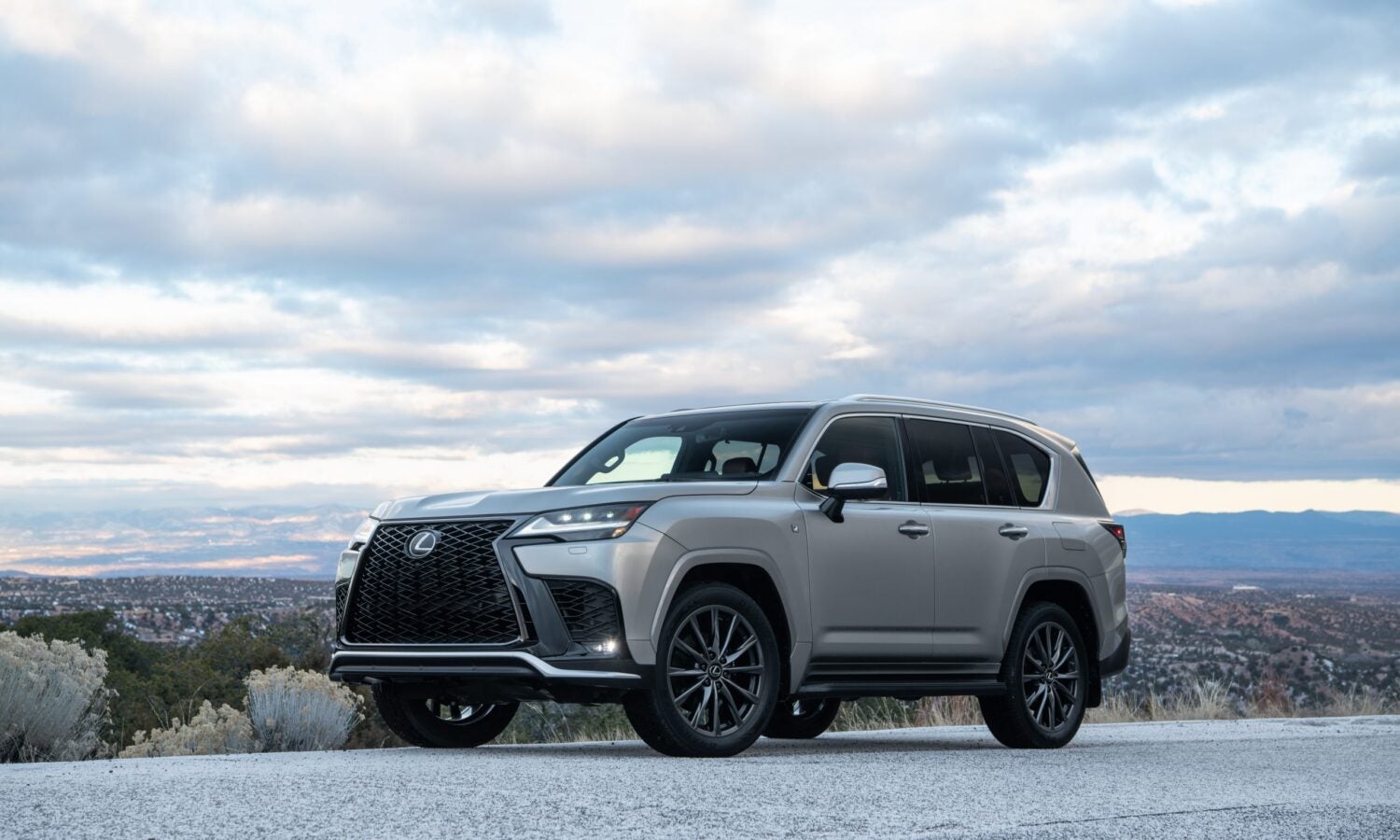
A silver Lexus LX on a hilltop near San Jose, CA

Full-size luxury SUV shoppers in the Bay Area have two serious options this year, and picking between them isn't as simple as picking a badge. Line up the 2026 Lexus LX vs 2027 Infiniti QX80, and the differences go well beyond styling. Powertrain choice, standard safety tech, and ownership costs five years down the road all diverge in ways that matter.

If you're weighing an LX vs Infiniti QX80 purchase, we can tell you where each vehicle stands, and why the LX pulls ahead once you dig into the specifics. If you want to see the LX in person, you can explore our new Lexus LX inventory at Lexus Stevens Creek.

2026 Lexus LX vs. 2027 Infiniti QX80: Comparing Full-Size Luxury SUVs

Both of these SUVs are built for family duty, towing, and the kind of Highway 17 commute through the Santa Cruz Mountains that wears on lesser vehicles. The Infiniti QX80 vs Lexus LX comparison often gets framed as space versus refinement, but that's an oversimplification. The LX brings a body-on-frame GA-F platform, a choice between gas and hybrid power, standard 4WD on every grade, and suspension technology that comes standard from the entry trim up. The QX80 makes its case on interior room and a lower starting price. Here's how each category actually breaks down.


Spec

LX 600 (Lexus)

LX 700h (Lexus)

QX80 (Infiniti)

Engine

Twin-turbo 3.4L V6

Twin-turbo 3.4L V6 hybrid

Twin-turbo 3.5L V6

Horsepower/Torque

409 hp / 479 lb-ft

457 hp / 583 lb-ft

450 hp / 516 lb-ft

Transmission

10-speed automatic

10-speed automatic

9-speed automatic

Drivetrain

4WD standard

4WD standard

RWD standard, 4WD optional

Towing Capacity

8,000 lbs

8,000 lbs

8,500 lbs

Fuel Economy (MPG)

17/22/19

19/22/20

16/19/17

Trim Lineups and Value at a Glance

Pricing is often the first filter buyers apply, and here the conversation gets interesting. The Infiniti starts lower, but the Lexus counters with a broader trim spread and features that come standard rather than bundled into pricier packages.

Lexus LX Trim Levels and Value

The 2026 Lexus LX comes in five grades spanning two powertrains: Premium, F SPORT Handling, Luxury, Ultra Luxury, and Overtrail, with the Overtrail offered on the LX 700h hybrid in either a two-row or three-row configuration.

What matters more than the grade names is where Lexus draws the line on standard equipment. Active Height Control, Adaptive Variable Suspension, full-time 4WD and the complete Lexus Safety System+ 3.0 suite are on every grade, so the entry-level Premium already has the hardware that competitors reserve for their upper trims. Moving up the range adds comfort, materials and specialized capability rather than filling in gaps.

Infiniti QX80 Trim Levels for Comparison

The 2027 Infiniti QX80 offers four trims: Pure, Luxe, Sport, and Autograph. RWD is standard on the Pure and Luxe trims, with 4WD available as a $3,000 option on those two; the Sport and Autograph trims come with 4WD only, standard, and don't offer an RWD configuration. That's a meaningful distinction for buyers who assume every trim offers a choice between drivetrains.

Craftsmanship and Interior Comfort

Cabin Materials and Quiet Refinement

Step inside the LX and you'll notice semi-aniline leather, five-program massaging front seats, and a driver's environment built around a 12.3-inch touchscreen paired with an LX-exclusive 7-inch lower display for terrain modes, climate and ride height, more than 19 inches of screen in total.

New for 2026 is an F SPORT Appearance Package on the LX 700h F SPORT Handling grade, adding color-keyed bumper accents, black mirror covers and black rear spoiler winglets. Lexus pairs the cabin with an available Mark Levinson audio system, which matters on longer stretches like the drive to Yosemite where road noise wears on passengers.

The QX80 brings its own premium touches, including dual 14.3-inch displays with Google built-in and a Klipsch audio system. Both cabins feel upscale, but the LX's material quality and acoustic engineering lean toward a quieter, more isolated ride.

Seating Comfort and Third-Row Livability

The LX offers real flexibility here. Most grades seat up to seven, the LX 700h Overtrail can be configured as a two-row or three-row, and the Ultra Luxury swaps the third row entirely for a four-seat executive layout with massaging second-row captain's chairs. Fold the rows down in an LX 600 and you have up to 64 cubic feet to work with. The QX80's third row is the roomier of the two for adult passengers, so families who regularly carry seven grown-ups should sit in both. For everyone else, the LX's range of layouts covers more use cases from one lineup.

Before we get into performance, if you're already leaning toward the LX's blend of craftsmanship and capability, contact our team and we can walk you through current inventory and trim availability.

Performance That Balances Power and Poise

Twin-Turbo Powertrain and Drivability

One thing worth clearing up first: the QX80 uses a twin-turbocharged 3.5L V6 producing 450 horsepower and 516 lb-ft of torque, paired with a 9-speed automatic. It's not a V8, despite what some outdated coverage suggests. The LX 600 runs its own twin-turbo 3.4L V6, generating 409 horsepower and 479 lb-ft, paired with a 10-speed automatic.

Lexus pulls ahead on choice, though, offering the LX 700h, a hybrid variant using the same twin-turbo V6 boosted to 457 horsepower and 583 lb-ft. That gives buyers a second powertrain option the QX80 simply doesn't offer.

On-Road Composure and Off-Road Confidence

Every 2026 LX grade comes standard with Active Height Control and Adaptive Variable Suspension, technology that adjusts ride height and damping in real time. On the QX80, the Electronic Air Suspension and Dynamic Digital Suspension systems arrive at the Luxe grade, so the entry-level Pure goes without. Buy the least expensive LX and you still get the full suspension setup.

For Bay Area drivers dealing with the twists of Highway 17 or the elevation changes heading toward Tahoe, that consistency shows up in body control and ride comfort no matter which trim you pick. The LX Overtrail trim adds front and rear locking differentials, 33-inch all-terrain tires, a 2,400W AC inverter, and a front skid plate for genuine off-road use. Infiniti hasn't built out a comparable trail-focused trim for the QX80; the lineup leans more toward comfortable on-road cruising than trail capability.

Advanced Technology and Driver-Assistance Features

Every 2026 LX grade includes Lexus Safety System+ 3.0 as standard equipment: Pre-Collision System with Pedestrian Detection, full-speed Dynamic Radar Cruise Control, Lane Departure Alert with Steering Assist, Lane Tracing Assist, Road Sign Assist and Proactive Driving Assist. Blind Spot Monitoring and a Panoramic View Monitor are standard as well, and Traffic Jam Assist is available with an active Drive Connect subscription. That's the full suite from the entry grade up.

Infiniti equips every QX80 with ProPILOT Assist, but the hands-free ProPILOT Assist 2.1 system is standard only on the top Autograph grade and runs $3,300 as an option on Luxe. Pure and Sport buyers don't get the hands-free version at all.

Both vehicles offer modern infotainment with wireless Apple CarPlay and Android Auto, so day-to-day connectivity is close. Where the LX pulls ahead is what arrives without a package sheet: suspension, 4WD and the full driver-assistance suite on every grade.

Lexus Reliability, Warranty, and Ownership Confidence

Reliability data favors Lexus consistently, and this year is no exception. In the J.D. Power 2026 U.S. Vehicle Dependability Study, Lexus ranked highest overall and among premium brands for the fourth consecutive year, with a score of 151 problems per 100 vehicles against an industry average of 204. Lexus and Toyota took the most model-level awards in the study, with the GX among the winners. That kind of track record matters for a vehicle you plan to keep for years.

Coverage backs it up. The LX carries 48 months or 50,000 miles of basic coverage and 72 months or 70,000 miles on the powertrain, and LX 700h buyers get an additional 8 years or 100,000 miles on hybrid components, coverage the QX80 has no equivalent for since Infiniti doesn't offer a hybrid in this segment. New Lexus vehicles also include complimentary scheduled maintenance for the first two service visits, at 6 months or 5,000 miles and 12 months or 10,000 miles.

If you're considering a certified pre-owned route, L/Certified by Lexus vehicles add factory-backed coverage beyond the original warranty, and our factory-trained technicians at Lexus Stevens Creek know both the LX's turbo and hybrid systems well, whether you need routine maintenance or something more involved.

Resale Value and Long-Term Cost of Ownership

Kelley Blue Book named Lexus its 2026 Best Resale Value: Luxury Brand for the fifth consecutive year, with an overall resale value average of 47%, the strongest in the luxury segment. Depreciation is usually the single largest cost of owning a vehicle in this class, so a brand that holds value narrows the gap on a higher sticker price over a five-year hold. That's a real factor for anyone financing or planning to trade in down the line.

Why the 2026 Lexus LX Is the Smarter Luxury SUV Choice

Add it all up and the LX comes out ahead on the fundamentals that matter most. You get two powertrain choices instead of one, including a hybrid the QX80 has no answer for. You get Active Height Control, Adaptive Variable Suspension, full-time 4WD and the complete Lexus Safety System+ 3.0 suite standard on every grade rather than bundled into higher trims. And you get the dependability and resale record that has put Lexus at the top of the J.D. Power and Kelley Blue Book rankings year after year.

Buyers prioritizing maximum third-row room will want to drive the QX80 too. But for Silicon Valley drivers who want a vehicle that holds its value and handles Northern California's varied terrain with confidence, the LX vs Infiniti QX80 decision tends to favor Lexus.

Experience the 2026 Lexus LX at Lexus Stevens Creek

We're the #1 Lexus dealer by volume in Northern California for new sales as of 2025, with the largest new and pre-owned Lexus selection in the region. Our service center in Santa Clara, backed by mobile service options, keeps LX owners covered whether it's routine maintenance or something more specialized.

If you're ready to see the LX 600 or LX 700h up close, explore our new Lexus LX inventory or contact our team to schedule a test drive today.


Recommended Posts

A covered hiking trail in the San Francisco Bay Area

Can't-Miss Hiking Trails in the Bay Area

Ask ten Bay Area hikers for their favorite trail and you'll get ten different answers. That's part of what makes this region so good for hiking. You've got coastal bluffs a short drive from redwood canyons, and East Bay summits not far past either one, all packed into a surprisingly compact stretch of geography. We put together this guide because, from our home base in San Jose, we spend nearly as much time on these trails as we do behind the wheel getting to them. If you're gearing up for a season of exploring, you can browse new Lexus inventory built for trailhead runs, dirt roads, and everything in between. Why the Bay Area Is a Hiker's Paradise Few regions pack this much ecological range into a two-hour radius. You can walk under 250-foot redwoods in the morning and stand on a wind-scoured coastal bluff by lunch. Mild temperatures year-round mean hiking around Bay Area trails rarely goes fully out of season, though summer fog on the coast and dry heat inland change what "comfortable" looks like depending on where you go. Whether you want easy hikes in San Francisco or a demanding summit push in the East Bay, the options below cover every fitness level. Easy and Family-Friendly Trails Lands End Trail, San Francisco This 3.26-mile out-and-back along the northwestern San Francisco coastline takes about 1.5 to 2 hours and delivers views of the Golden Gate Bridge, Marin Headlands, and open Pacific. Along the way, you'll pass the Sutro Baths ruins and staircases leading to Eagle's Point Overlook. It's wheelchair-accessible from the Merrie Way parking lot, and leashed dogs are welcome. Read more in this Lands End trail guide. Glen Canyon Park, San Francisco Tucked off Elk Street and O'Shaughnessy Boulevard, the 66.6-acre Glen Canyon Park park holds a 3.7-mile trail network built around the free-flowing Islais Creek and dramatic chert rock formations. Spring brings wildflowers, and the 1.2-mile Creek to Peaks trail climbs toward Twin Peaks with rewarding city and bay views. Sunol Regional Wilderness, East Bay Established in 1962, this 6,850-acre East Bay Regional Park District property sits near Sunol, south of Pleasanton and east of Fremont. Grazing cattle share the trails here, so follow posted District safety guidance around livestock. Stop by the Old Green Barn Visitor Center, then head toward Little Yosemite, a small gorge along Alameda Creek. Elevations climb from roughly 400 to over 2,200 feet, and there's no water on the trails, so pack your own. Full details in this Sunol Regional Wilderness hike guide. Riverfront, Waterfall, and Redwood Trails Uvas Canyon Waterfall Loop, South Bay This 1,147-acre park in the eastern Santa Cruz Mountains has 7.2 miles of trails total. The 1-mile Waterfall Loop follows Swanson Creek, while the fuller loop combining the Waterfall Loop, Contour Trail, and Alec Canyon Trail visits multiple waterfalls across 3.5 miles. Day-use reservations are required daily, so plan ahead. More on the Uvas Canyon Waterfall Loop. Cataract Falls, Mount Tamalpais On Mt. Tam's northern slope, the Cataract Trail follows Cataract Creek from its origin on the mountain down to Alpine Lake, passing through ferns and stands of coast redwood and Douglas fir, with tanoak and bay laurel filling in the understory. The trail runs roughly 3 miles between Alpine Lake and Rock Spring parking. Flow is strongest after winter storms and noticeably lower by late summer, so check with Marin Water for current conditions before you go. Details in this Cataract Falls trail write-up. Muir Woods National Monument, Marin Muir Woods offers 6 miles of trails with loop options running roughly 30 minutes to 90 minutes. The Main Trail follows Redwood Creek across boardwalk, asphalt, and packed soil; the shortest loop, a flat 0.5 miles, ends at Bridge 2, while a longer 2-mile version reaches Bridge 4. The tallest redwood here reaches 258 feet within 550-plus acres of old growth. Pets, bikes, and camping aren't permitted, and parking requires a reservation through GoMuirWoods.com. Learn more from the National Park Service on Muir Woods. Scenic Coastal and Ridge Hikes Point Reyes National Seashore, Marin Home to over 1,500 plant and animal species across roughly 150 miles of trails, Point Reyes is worth the drive north. Pick up maps at the Bear Valley Visitor Center. Alamere Falls, a tidefall dropping into the Pacific, is a highlight, but stick to official trails toward Wildcat Campground before descending to the beach, and check the NPS advisories page for current status. More at this Point Reyes hiking resource. Marin Headlands: Hawk Hill and Slacker Hill Part of the Golden Gate National Recreation Area, this area also includes Rodeo Lagoon, Gerbode and Tennessee Valley, and Point Bonita Lighthouse. A 2017 trail realignment opened up Hawk Hill's 360-degree views to more visitors, and it's prime territory for fall raptor migration viewing on fog-free days between 10 a.m. and 2 p.m., September and October. It's also mission blue butterfly habitat, so stay on trail. Slacker Hill pairs naturally via the Coastal Trail. See this Marin Headlands lookout guide. Devil's Slide Coastal Trail, Pacifica This 1.3-mile paved trail follows a former stretch of Highway 1, with separated lanes for hikers and cyclists, plus benches, observation scopes, and restrooms along the way. It's part of the California Coastal Trail, a route that will eventually run 1,200 miles between Oregon and Mexico. On clear days, views stretch to Pedro Point Headlands, Mt. Tam, and Point Reyes. Full write-up at this Devil's Slide Trail guide. Adventurous Day Hikes and Summit Climbs Mission Peak Regional Preserve, Fremont Mission Peak connects to the 28-mile Ohlone Regional Wilderness Trail, linking Mission Peak, Sunol, Ohlone Wilderness, and Del Valle. The summit approach is rugged, and the payoff is a sweeping valley and bay view. Late-July heat makes early starts and extra water non-negotiable here. More context via this Ohlone Wilderness Trail overview. Mount Diablo State Park, East Bay Mount Diablo is one of the East Bay's most recognizable summits, with fire roads and single-track trails radiating from the peak and serious elevation gain for anyone tackling it from the base. Panoramic views make it worth the climb, but treat it with the same heat caution as Mission Peak during summer months. Mount Umunhum, Sierra Azul Preserve At 19,000-plus acres, Sierra Azul is Midpen's largest preserve, and Mount Umunhum's peak sits at 3,486 feet, the highest point on the Bay Area Ridge Trail. From the top, you're looking down over Lexington Reservoir, Los Gatos, and southern San Jose, close enough to home that we consider it a neighborhood hike. The Guadalupe Creek Overlook marks roughly a third of the way up, and the round trip runs 8.2 miles with 1,187 feet of elevation gain, taking about 3.5 to 4 hours. The upper 3 miles stay shaded under coast live oak and foothill pine, with California bay and Pacific madrone mixed throughout. Gates open at 7 a.m. and close at sunset. Read more in this Mount Umunhum trail resource. Worth the Drive: Santa Cruz Mountain Escapes Big Basin Redwoods and Berry Creek Falls Big Basin is California's oldest state park, known for old-growth redwoods and the multi-cascade Berry Creek Falls loop. Recovery from the 2020 CZU fire is ongoing, and the old observation platform near the falls was destroyed in that fire, so trail access and conditions change. Verify current status on the official California State Parks site before you head out. More background at this Bay Area redwood hikes overview. Henry Cowell Redwoods State Park This park mixes coast redwood and Douglas fir with bay laurel and tanbark oak across trails suited to hikers of most levels, plus seasonal fishing, camping, and birdwatching. The Fall Creek Unit, a second-growth forest with a fern-lined canyon and remnants of the old lime industry, is day-use only. Horses are restricted on named trails and drones aren't allowed. A $10 day-use parking fee applies (per California State Parks; $9 for seniors 62+). Details at this Henry Cowell Redwoods guide. Trail Tips: Seasons, Permits, and Safety Rainy season, roughly November through March, is what actually fills creeks and waterfalls, so if you're chasing waterfalls, wait until after a few good storms before heading to Uvas Canyon or Cataract Falls. Summer brings coastal fog along the Pacific side while inland areas like Mission Peak and Mount Diablo turn hot and dry, though redwood groves stay cool. Autumn tends to offer the clearest, least foggy days, and winter turns hillsides green and trails muddy while waterfalls reappear. On the safety side, learn to spot poison oak: leaves grow in groups of three, gently lobed, showing up as a bush, vine, or ground cover in green or reddish tones. Many people react to it, so long pants are a smart call on brushier trails. Watch for ticks and rattlesnakes on grassy or rocky sections, and respect fog and wind on exposed coastal trails like Lands End or Devil's Slide. At Sunol, follow East Bay Regional Park District guidance around grazing cattle. Given this is late July, treat Mission Peak and Mount Diablo with real heat caution, watch general fire risk, and expect lower water flow at Cataract Falls and Uvas Canyon than you'd see in spring. Explore the Bay Area in Comfort with Lexus Stevens Creek Gear and Driving Tips Good gear gets you to the trailhead, but the drive there matters too. Rough fire roads leading to Mount Umunhum or Mount Diablo, gravel lots at Sunol, and foggy coastal turns near Devil's Slide all benefit from a vehicle with confident all-weather capability and enough cargo room for your boots and packs, plus whatever gear you end up hauling back muddy after the hike. An AWD-capable Lexus handles that kind of range without much fuss, and if you want to look before a weekend trip, you can find an AWD-capable Lexus in our current lineup. Contact Us Whether you're chasing scenic hikes in Bay Area redwood groves or ridge-top views near Los Gatos, having reliable transportation makes the whole outing easier. We're proud to be Northern California's top-volume Lexus dealer for new and pre-owned vehicles, and we've been serving Silicon Valley from Stevens Creek Boulevard since 1989. If you have questions about which model fits your outdoor plans, or want to schedule a pre-trip service check, contact Lexus Stevens Creek and we'll help you get ready for your next trail day. Photo by Megan Lee on Unsplash

Lexus GX

2026 Lexus GX vs. Mazda CX-90: Why the GX Comes Out on Top

Choosing between a body-on-frame off-roader and a refined crossover comes down to how you actually plan to drive. The 2026 Lexus GX vs. Mazda CX-90 comparison depends on whether you need a three-row SUV that can tow a boat and climb a fire road, or one built primarily for pavement. If you want to see the GX in person, you can browse our new Lexus GX inventory at Lexus Stevens Creek before reading further. Both vehicles compete in the midsize three-row SUV space, though only the GX carries a luxury badge, and they take different paths to get there. The GX leans on rugged, truck-based engineering, riding on the same GA-F ladder frame platform as the flagship Lexus LX, while the CX-90 prioritizes on-road refinement and efficiency with a unibody design. That distinction shapes nearly every part of this comparison. Trim Value: What You Get for Your Money Trim value is where the GX's engineering priorities become clear. Rather than listing dollar figures, it helps to look at what each trim tier includes standard, since that's where the real comparison happens. Lexus GX 550 Trim Lineup The GX 550 comes in six trim grades: Premium, Premium+, Luxury, Luxury+, Overtrail, and Overtrail+. Even the base Premium trim includes Lexus Safety System+ 3.0, a 14-inch touchscreen, and full-time 4WD with a locking center differential. The 21-speaker, 1,800-watt Mark Levinson audio system becomes standard on the Luxury+ trim. Those weighing financing options can get pre-approved online before visiting the showroom. Mazda CX-90 Trim Lineup Mazda structures the CX-90 lineup to appeal to a wider price range, with the 3.3 Turbo Select as an accessible entry point and the 3.3 Turbo S Premium Plus at the top. New for 2026, the 3.3 Turbo S Premium Sport trim brings the sportier appearance package to the high-output engine, and Alexa Built-In is now standard across the lineup. The two SUVs stack up like this on core performance specs: Spec Lexus GX 550 Mazda CX-90 Engine/Powertrain 3.4L twin-turbo V6 3.3L turbo inline-6 with 48V mild hybrid; PHEV available Drivetrain Full-time 4WD i-ACTIV AWD Transmission 10-speed automatic 8-speed automatic Horsepower/Torque 349 hp / 479 lb-ft 280 hp / 332 lb-ft standard; 340 hp / 369 lb-ft on Turbo S with premium fuel Towing Capacity 9,096 lbs on Overtrail, 9,063 lbs on Premium, Premium+ and Overtrail+, lower on Luxury grades 3,500 lbs standard; 5,000 lbs with the Towing Package on Premium Sport and above Fuel Economy 15 city / 21 highway / 17 combined MPG, premium recommended 23 city / 28 highway / 25 combined MPG on regular fuel The 2026 Lexus GX: Rugged Luxury and Proven Capability The GX rides on the GA-F platform with genuine body-on-frame construction, seating up to seven and sharing its underpinnings with the Toyota Land Cruiser Prado sold globally. That foundation gives the GX a durability profile that unibody crossovers simply can't replicate, and it's a big reason we see so many long-term GX owners return to Lexus Stevens Creek for service rather than trade in early. Powertrain, Towing, and Off-Road Prowess Under the hood, the GX 550's twin-turbo V6 produces 349 hp and 479 lb-ft of torque. Towing varies more by grade than most shoppers expect: 9,096 lbs on the Overtrail, 9,063 lbs on Premium, Premium+ and Overtrail+, then 7,844 lbs on Luxury and 7,611 lbs on Luxury+. Confirm the number for the trim you're considering before you plan around it. Even at the conservative end, that's well beyond the CX-90's 5,000 lb ceiling on Premium Sport and above with the Towing Package. For Bay Area owners, that difference isn't abstract: it means pulling a boat up to Tahoe or hauling a trailer into the Santa Cruz Mountains without thinking twice about the load. Standard full-time 4WD with a locking center differential comes on every GX 550 trim, and the Overtrail and Overtrail+ grades add serious off-road hardware. You get a locking rear differential and adaptive suspension with E-KDSS, plus a standard 1-inch lift that brings ground clearance to 9.84 inches. Throw in 33-inch all-terrain tires, a front skid plate, and a roof rack, and you've got hardware most crossovers in this class simply don't offer. For drivers who want to escape San Jose traffic for a weekend on unpaved trails near the coast or up in the Sierra foothills, that gap matters. Edmunds independently tested the GX's 0-60 mph time at 6.7 seconds, slightly behind Lexus's own claimed 6.5 seconds but still respectable for a vehicle built with this much off-road capability in mind. Premium Interior Comfort and Technology Inside, the GX pairs NuLuxe leatherette or semi-aniline leather upholstery with heated, ventilated, and massaging front seats depending on trim. The 14-inch touchscreen runs alongside a 12.3-inch digital instrument cluster, and wireless Apple CarPlay and Android Auto come standard across the lineup. Cargo capacity reaches 76.90 cubic feet in the three-row configuration, or 90.50 cubic feet in the two-row Overtrail setup, giving families and gear-haulers real flexibility. If you want to experience the cabin firsthand, browse our new Lexus GX inventory to schedule a test drive. The 2026 Mazda CX-90: A Brief Look at Its Distinctive Features Mazda positions the CX-90 as an upscale alternative without a luxury badge, competing more directly with the Kia Telluride, Toyota Grand Highlander, and Acura MDX than with traditional luxury SUVs. It's a legitimately well-designed vehicle for buyers who prioritize daily drivability and styling over off-road hardware. Mazda offers a 3.3L turbocharged inline-6 producing up to 280 hp and 332 lb-ft in standard form, with the Turbo S variant pushing output to 340 hp and 369 lb-ft on premium fuel. A CX-90 PHEV variant adds up to 26 miles of electric-only range for drivers who do a lot of short-distance commuting. The CX-90 earned the 2026 IIHS TOP SAFETY PICK+ award along with a 5-Star NHTSA Overall safety rating, both solid marks that speak to its on-road engineering. Interior Space, Comfort, and Cargo Capacity Compared Seating capacity is close between the two, with the CX-90 accommodating 7 to 8 passengers depending on configuration and the GX seating up to 7 on Premium, Premium+, Luxury and Luxury+ grades. Cargo splits the decision. Behind the third row, the CX-90 is the more practical of the two, offering 14.9 cubic feet with the three-person bench and 15.9 cubic feet in configurations with the two-person third row, against the GX's 10.3. Fold everything down and the order reverses: the CX-90 maxes out at 74.2 to 75.2 cubic feet, while the GX reaches 76.9 in three-row form and 90.5 in the two-row Overtrail setup. If you regularly carry seven people and their bags, the Mazda wins the week. If you're loading camping gear or off-road equipment with the seats down, the GX has more room to work with. Technology, Safety, and Driver-Assistance Features Every GX 550 trim comes standard with Lexus Safety System+ 3.0, which includes a Pre-Collision System with Pedestrian Detection, full-speed Dynamic Radar Cruise Control, Lane Departure Alert with Steering Assist, Lane Tracing Assist, Road Sign Assist, Proactive Driving Assist and the Emergency Driving Stop System. Blind Spot Monitor, Rear Cross-Traffic Alert and parking sensors with automatic braking are also standard across the lineup. Traffic Jam Assist is available as well. Mazda equips every CX-90 with its i-Activsense suite as standard, and its IIHS TOP SAFETY PICK+ rating and 5-Star NHTSA score confirm it performs well in independent crash testing. Both brands take safety seriously, and the difference is at the margins rather than the fundamentals: features like front cross traffic alert, traffic sign recognition and the 360-degree parking sensors arrive on upper CX-90 trims, while the GX includes its equivalents from the base grade. Traffic Jam Assist on the GX requires an active Drive Connect subscription. Reliability, Warranty, and Ownership Costs Long-term ownership costs come down to warranty length and how the vehicle is expected to hold up once that coverage runs out. Lexus GX Warranty Coverage and Predicted Reliability The GX comes with a 4-year/50,000-mile basic warranty and a 6-year/70,000-mile powertrain warranty, backed by 6-year unlimited-mileage corrosion protection and 4-year roadside assistance. Lexus consistently ranks near the top of reliability studies from J.D. Power and Consumer Reports, a reputation that plays a real role in resale value and peace of mind. Our certified service team at Lexus Stevens Creek supports GX owners for the long haul, handling everything from routine maintenance to more involved repair work with factory-trained technicians. You can schedule a service appointment online whenever it's convenient. Mazda CX-90 Warranty Coverage and Predicted Reliability Mazda backs the CX-90 with a shorter 3-year/36,000-mile basic warranty and 5-year/60,000-mile powertrain warranty, plus 5-year unlimited-mileage corrosion coverage. The PHEV's battery carries separate 8-year/100,000-mile coverage. RepairPal gives the CX-90 a reliability score of 4.0 out of 5, a solid mark, though it comes with shorter coverage windows than the GX offers across the board. Why the 2026 Lexus GX Comes Out on Top Line up the 2026 Lexus GX vs. Mazda CX-90 side by side, and two numbers do most of the talking: warranty length and towing capacity. The GX's 6-year/70,000-mile powertrain warranty outlasts the CX-90's 5-year/60,000-mile coverage, and its towing capacity of up to 9,096 lbs nearly doubles the CX-90's ceiling of 5,000 lbs on upper trims equipped with Mazda Genuine Towing Accessories. Add in Edmunds' 7.3/10 rating, standard safety tech across every trim, and a reliability reputation reinforced by J.D. Power and Consumer Reports, and the GX is the more complete vehicle for buyers who want luxury without giving up genuine capability. Explore the 2026 Lexus GX at Lexus Stevens Creek The 2026 Lexus GX, built by Lexus on a proven body-on-frame platform, gives Bay Area drivers a combination that's hard to find elsewhere: real off-road hardware and a towing capacity that can handle serious gear, backed by a warranty that outlasts most competitors in its class. Ready to Get Behind the Wheel? If you're ready to see it in person, browse our new Lexus GX inventory at Lexus Stevens Creek, or contact our team to schedule a test drive and talk through financing or trade-in options. As Northern California's top-volume Lexus dealer, we're here to help you find the GX trim that fits how you actually drive.

Lexus GX

Lexus GX vs. LX: Comparing Size, Space, and Dimensions

If you've been cross-shopping Lexus SUVs, you've probably asked the same question we hear constantly at our showroom: which one is actually bigger, the GX or the LX? Each model has its own strengths depending on how you plan to use it, and a few of the numbers might surprise you. You can browse our new Lexus GX and LX inventory to see both models side by side, but let's break down the real measurements first. Lexus GX vs. LX: Which Is Bigger? In terms of overall footprint, the LX is the larger vehicle, with a longer body and a wider cabin designed for flagship comfort. Size isn't a single number though, and the GX closes the gap in ways that matter for real driving situations. The GX actually leads in third-row legroom, maximum cargo volume, and towing capacity. That's the kind of detail a spec sheet reveals but a showroom floor doesn't always show at a glance. Here's a quick side-by-side look at how the two compare on the numbers that matter most. Spec Lexus GX 550 Lexus LX 600 / 700h Length 197.05 in. 200.2 – 200.59 in. Width (w/o mirrors) 77.95 – 78.74 in. 78.35 in. Height 75.39 – 77.17 in. 74.21 – 74.61 in. Wheelbase 112.2 in. 112.2 in. 2nd-Row Legroom 36.73 in. 36.61 in. (33.86 in. Ultra Luxury) 3rd-Row Legroom 37.89 in. 31.1 in. Max Cargo (3-row models) 76.9 cu. ft. 64.0 cu. ft. (LX 600) / 62.4 cu. ft. (LX 700h) Max Cargo (2-row models) 90.5 cu. ft. (Overtrail, Overtrail+) 71.0 cu. ft. (LX 600) / 62.6 cu. ft. (LX 700h) Exterior Dimensions Compared Length, Width, and Height The GX 550 measures 197.05 in. in length, while the LX stretches to 200.59 in. on most grades and 200.2 in. on F SPORT, giving it a slightly longer, more commanding stance. Width without mirrors is close between them: 77.95 in. on standard GX trims, widening to 78.74 in. on Overtrail and Overtrail+, versus 78.35 in. for the LX. Neither model has a dramatic advantage squeezing through narrow lanes. Height flips the script a bit. The GX stands taller, at 75.39 in. on standard trims and up to 77.17 in. on the Overtrail grades, compared to the LX at 74.21 to 74.61 in. depending on wheel and tire size. That comes down to the GX's more rugged, body-on-frame stance and its taller ride height. Wheelbase and Turning Radius Both SUVs share a 112.2 in. wheelbase, so ride stability on the highway is comparable between them. Turning circles are close as well, with both landing right around 39.4 ft. curb-to-curb, and the LX needing roughly 42.0 ft. wall-to-wall on its 22 in. wheel setup. For anyone dealing with tight San Jose garages or the tiered parking structures downtown, that similarity means neither model has a real edge in close-quarters maneuvering, though the GX's shorter overall length can help when backing into a compact space. Interior Space and Passenger Comfort Front and Second-Row Room Up front, the LX offers more shoulder and hip room, at 61.42 in. and 59.65 in. respectively, compared to the GX's 59.51 in. shoulder and 56.46 in. hip room. Front legroom is essentially a wash, 41.14 in. in the LX versus 41.18 in. in the GX. Second-row comfort is close too. The GX offers 43.15 in. of headroom and 36.73 in. of legroom, while the LX provides 38.98 in. of headroom and 36.61 in. of legroom. One exception worth knowing: the LX 700h Ultra Luxury swaps the standard bench for a four-seat second row with a reclining right-rear seat and ottoman. That configuration trades measured legroom, dropping to 33.86 in., for a level of comfort closer to what you would expect in a chauffeured sedan. Third-Row Seating Space GX third-row legroom measures 37.89 in., about 6.8 in. more than the LX's 31.1 in. For families doing regular third-row carpooling around the Bay Area, that's a meaningful difference for anyone riding back there on a regular basis. The GX seats up to seven passengers, and that legroom advantage makes those rear seats genuinely usable for adults, not just kids on short trips. Cargo Capacity: Behind the Third Row and Maximum Storage Cargo numbers depend heavily on configuration, so it helps to compare like for like. In three-row form, the LX 600 offers 11 cu. ft. behind the third row, about 44 cu. ft. with the third row folded, and roughly 64 cu. ft. with the second and third rows down. The three-row GX comes in at 10.3 cu. ft., 40.2 cu. ft., and 76.9 cu. ft. in those same configurations. Behind the third row the two are nearly identical, but with everything folded the GX opens up close to 13 cu. ft. more usable space. The hybrid gives up ground here. The LX 700h holds about 7.2 cu. ft. behind the third row and tops out near 62.4 cu. ft. with the rear rows folded, noticeably less than the LX 600. Two-row layouts widen the gap further. The GX Overtrail and Overtrail+ reach 45.6 cu. ft. behind the second row and a maximum of 90.5 cu. ft. with the seats folded. A two-row LX 600 offers about 46 cu. ft. with all seats up and a maximum of 71 cu. ft., while the two-row LX 700h maxes out around 62.6 cu. ft. If you are hauling gear for a trip to the lake or moving bulky equipment, the GX is the more accommodating of the two. Size vs. Capability: Towing and Payload The GX runs a 3.4L twin-turbo V6 producing 349 hp and 479 lb-ft of torque, with a maximum tow rating of 9,063 lbs. Ratings vary by grade and equipment, so confirm the number for the specific trim you are considering. The LX 600 uses the same twin-turbo V6 tuned to 409 hp and 479 lb-ft, and the LX 700h hybrid produces 457 hp and 583 lb-ft. Both are rated to tow 8,000 lbs. when equipped with the Towing Package. That leaves the GX with roughly a 1,000 lb. advantage at the top of its range, which matters if you are hitching a boat for a weekend on one of the local lakes or heading for trails outside Silicon Valley. Curb weight and GVWR differ as you would expect. The GX sits around 5,467 lbs. with a 6,920 lb. GVWR. The LX 600 ranges from 5,754 to 5,875 lbs. with a 7,230 lb. GVWR, and the heavier LX 700h runs 6,128 to 6,261 lbs. with a 7,450 lb. GVWR. Choosing the Right Size for Your Lifestyle The GX: Rugged Versatility in a Mid-Size Frame The GX is built for buyers who want real capability without stepping into flagship-size territory. Minimum ground clearance is 8.7 in. on standard trims and 9.84 in. on the Overtrail grades, which suits hillside driveways and unpaved trails around the region. Its power figures pair with towing and cargo numbers that hold up in practice rather than just on paper. Across the lineup, from the standard trims through the off-road-focused Overtrail and Overtrail+, the GX balances comfort with outdoor capability. The LX: Flagship Space and Presence The LX remains at the top of the Lexus SUV lineup for good reason. Its extra length, wider front seating, and the available reclining second-row seat with ottoman create a cabin built around premium comfort. Ground clearance of 7.87 to 8.07 in. still handles rough surfaces, and the LX 700h adds meaningful torque for effortless highway work. For buyers who prioritize front and second-row luxury and value the LX's commanding road presence, it is the stronger choice for chauffeured comfort or long drives with fewer passengers in back. Experience the Difference at Lexus Stevens Creek Numbers on a page only tell part of the story. The best way to understand the difference between the GX and LX is to sit in both, fold down the seats, and see how each one fits your daily routine. Maybe that's a carpool run, maybe it's a weekend tow, maybe it's just a drive through the Santa Clara hills. Our team can walk you through every trim and configuration in person. Contact Lexus Stevens Creek to schedule a test drive and get a real feel for how these two Lexus SUVs compare on the road. Lexus GX vs. LX Size FAQ Is the Lexus GX or LX Bigger Overall? The LX is longer overall, at 200.59 in. versus the GX's 197.05 in., and it offers more front shoulder and hip room, making it the larger flagship model in terms of overall footprint. The GX is the taller of the two, particularly in Overtrail form. Which Model Offers More Third-Row Legroom? The GX actually leads here, with 37.89 in. of third-row legroom compared to 31.1 in. in the LX, a difference of roughly 6.8 in. that makes the GX's back seat more comfortable for adult passengers. Is Cargo Space Always Greater in the LX? No, and in most configurations the opposite is true. A three-row GX holds up to 76.9 cu. ft. with the rear rows folded, compared to about 64 cu. ft. in a three-row LX 600 and 62.4 cu. ft. in the LX 700h. In two-row form, the GX Overtrail and Overtrail+ reach 90.5 cu. ft. against the LX 600's 71 cu. ft. The LX holds a slight edge only in the space directly behind the third row, at 11 cu. ft. versus 10.3 cu. ft.